
Guide to Online Forex Trading in Kenya
📈 Learn how to trade forex online in Kenya safely with this practical guide. Discover trusted platforms, risk management, legal tips, and solid strategies to boost your trading.
Edited By
Daniel Richards
Online forex trading has grown steadily in Kenya, attracting a diverse group from entrepreneurs and investors to seasoned financial analysts. Its appeal lies in the accessibility—just a smartphone or computer plus internet access lets you buy and sell currencies across global markets. However, diving straight into forex without understanding the basics can be risky.
At its core, forex trading involves exchanging one currency for another, usually quoted in pairs like USD/KES or EUR/USD. Currency values fluctuate due to economic indicators, political events, and market sentiment. Traders profit by buying currencies expected to strengthen and selling those likely to weaken.
Key players include central banks, commercial banks, hedge funds, brokers, and retail traders like you and me. Kenyan traders often focus on stable pairs involving the US dollar, euro, sterling, and the Kenyan shilling. The forex market operates 24 hours, opening on Monday morning in Asia and closing Friday night in New York, offering flexibility uncommon in traditional markets.
Remember, forex trading isn't a quick-rich scheme; it requires knowledge, patience, and discipline.
To start trading, first pick a licensed forex broker accessible from Kenya. Platforms like HotForex, XM, and IG offer interfaces compatible with Kenyan users, including M-Pesa payment options. Once registered and verified with documents like your national ID, you can fund your account with an amount you’re comfortable risking.
Traders should always keep an eye on spreads (the cost of trading), leverage limits, and withdrawal processes. These significantly impact profitability and risk exposure. For example, leverage amplifies gains but also increases potential losses, so it needs careful handling.
Local considerations such as tax obligations also matter. Kenyan traders must declare profits in their annual returns through KRA (Kenya Revenue Authority). Staying compliant avoids complications down the line.
This guide will break down the practical steps for entering forex markets, choosing reliable platforms, spotting red flags, and applying strategies that suit Kenya’s unique economic environment. By knowing what to expect and how to prepare, you reduce guesswork and increase your chances of success in online forex trading.
Grasping the fundamentals of forex trading lays the groundwork for anyone keen to venture into this market. For Kenyan traders, understanding what forex trading entails, who takes part, and which currencies dominate the scene helps avoid unnecessary pitfalls and builds confidence.
Forex trading involves buying and selling currencies to profit from their changing exchange rates. Unlike investing in shares or bonds, forex trading focuses solely on currency pairs—traders speculate on how one currency will perform relative to another. For example, buying USD/KES means you expect the US dollar to strengthen against the Kenyan shilling.
This market operates 24 hours a day due to global time zones, providing flexibility to trade anytime, including after work or late at night. This feature makes it attractive to many here who juggle other responsibilities alongside trading.
Forex trading differs from traditional investments because it’s highly liquid and volatile. While stocks may rise or fall over weeks, forex prices can shift within minutes, offering quick profit opportunities but also higher risk. Moreover, forex trading usually involves leverage—using borrowed funds to increase trade size—which can amplify both gains and losses.
The forex market is made up of retail traders like individuals in Nairobi or Mombasa, and institutional investors such as banks, hedge funds, and multinational companies. Retail traders typically operate smaller accounts and rely on brokers to access the market, whereas institutions trade in vast volumes, influencing price movements.
Brokers act as intermediaries, connecting retail traders to the larger market. They provide the trading platforms, access to currency pairs, and tools like charts and orders. Liquidity providers, often large banks, ensure there is enough currency volume to trade smoothly. Without these players, retail traders would struggle to enter or exit positions at fair prices.
Kenyan traders often focus first on pairs involving the Kenyan shilling, such as USD/KES, since they directly affect local businesses and travel costs. Major international pairs like EUR/USD or GBP/USD also attract attention because they are highly liquid and less volatile.
Understanding that each currency pair features a 'base currency' and a 'quote currency' is essential. In USD/KES, the US dollar is the base currency, meaning the price tells you how many Kenyan shillings one US dollar costs. This setup helps traders understand which currency is being bought or sold in a trade.
Getting a solid grip on these basics helps Kenyan traders make informed decisions and effectively manage risks in a dynamic marketplace.
By starting with a clear picture of forex fundamentals, traders set themselves up for smoother navigation through the complexities of the currency market.
Starting your online forex trading journey in Kenya involves more than just signing up on a website. It requires careful planning, choosing the right partners, and setting up practical tools. This stage sets the foundation for successful trading by enabling you to operate safely and efficiently within Kenya’s specific financial and regulatory environment.
Before trading, you must select a trustworthy forex broker. Regulatory oversight is key here. In Kenya, brokers should ideally be registered with the Capital Markets Authority (CMA), which ensures they follow local rules that protect traders. Additionally, many reputable brokers have licences from international bodies like the Financial Conduct Authority (FCA) in the UK or the Australian Securities and Investments Commission (ASIC). Such credentials indicate the broker maintains global compliance standards, reducing the risk of fraud or mismanagement.
Fees are another important factor. Brokers charge through spreads (the difference between buying and selling prices) or commissions. Some may appear cheaper but have hidden fees, so compare these carefully. Good customer support also makes a difference — prompt, helpful service can save you from costly mistakes, especially when markets move quickly.
Opening a trading account involves providing documentation to meet Kenya’s Know Your Customer (KYC) rules. You'll typically need a valid ID, proof of residence, and sometimes proof of income. This process helps curb fraud and money laundering while protecting your investments. Brokers will guide you through these steps, but having these documents ready speeds up approval.
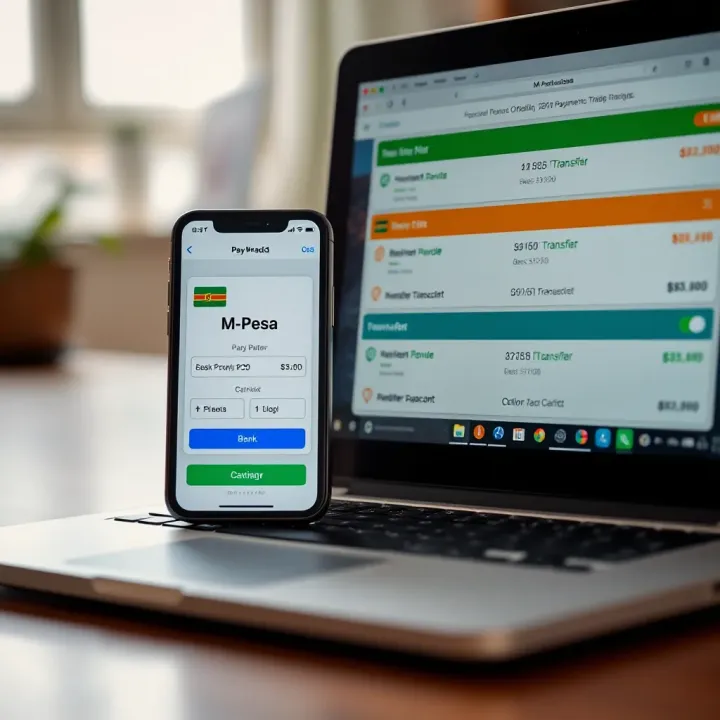
For funding your account, M-Pesa and local bank transfers are the most commonly accepted methods in Kenya. M-Pesa’s popularity means deposits can be instant and convenient, especially for those without traditional bank accounts. Bank transfers are also reliable but may take longer and come with higher charges. Consider transaction speeds and costs as these directly affect your trading flexibility.
Access to a stable and user-friendly trading platform influences your ability to react to market changes. In Kenya, popular platforms like MetaTrader 4 (MT4), MetaTrader 5 (MT5), and cTrader are widely used. These platforms support a variety of devices, including smartphones, which is practical for on-the-go traders.
Look for features that suit your trading style: real-time charting, one-click order execution, and reliable price feeds. Some platforms also offer demo accounts for practice without risking real money. Security is vital, so check that the platform uses encryption and two-factor authentication (2FA) to protect your account.
Remember, starting with the right broker and tools is not just about convenience — it directly affects your trading success and safety in the volatile forex world.
Taking these practical steps in Kenya’s context ensures you enter the forex market well-equipped and with confidence.
Trading forex without a solid plan can be like driving in Nairobi traffic without a route—you might get somewhere, but it won’t be quick or safe. Effective trading strategies help you make informed decisions, while risk management protects your capital from unexpected losses. Both are essential, especially given the volatile nature of currency pairs such as USD/KES where sudden economic news or policy changes can cause sharp swings.
Trend following involves identifying the general direction of a currency pair and making trades in the same direction. For instance, if USD/KES is consistently rising due to strong US economic data, a trader may buy USD against KES, riding the upward trend. This strategy banks on the idea that prices tend to move steadily in one direction for some time.
On the other hand, range trading suits periods when a currency pair moves sideways without clear direction. Imagine EUR/USD bouncing between certain support and resistance levels without breaking out; here, a trader buys near support and sells near resistance, profiting from the oscillation. Both strategies require careful observation and patience, but they are straightforward and fit most beginners.
Technical analysis uses price charts, indicators, and patterns to predict future movements. Traders in Kenya often rely on tools like moving averages, RSI (Relative Strength Index), and candlestick patterns to pinpoint entry and exit points. For example, spotting a ‘double bottom’ pattern on the USD/KES chart might hint at a reversal and a buying opportunity.
Fundamental analysis looks at economic indicators, political events, and central bank decisions. A Kenyan trader might track the Central Bank of Kenya’s interest rate announcements or GDP data to gauge shilling strength. Combining both analyses can sharpen decision-making—say, using fundamentals to understand why a currency is moving, and technicals to decide when to trade.
Stop-loss orders automatically close a trade once it hits a certain loss, protecting traders from deeper losses. For example, if you buy USD/KES at 110 and set a stop-loss at 108, your trade closes if the price falls to 108, limiting your loss.
Take-profit orders lock in gains by closing a trade when a target price is reached. If you aim to sell USD/KES at 115 after buying at 110, a take-profit order sets this exit automatically, saving you from second-guessing or missing profits during sudden market moves. Using these orders ensures discipline and manages risk without constant monitoring.
Many new traders fall into the trap of using excessive leverage, which amplifies both profits and losses. For instance, trading with 100:1 leverage means a small move in the pair can wipe out a large portion of your capital quickly. Kenyan traders should start with modest leverage levels, such as 10:1 or less, to avoid blowing their accounts.
Other pitfalls include emotional trading, chasing losses, and overtrading. It’s easy to get caught up after a bad trade, but sticking to your strategy and managing position sizes keeps you in the game longer. Also, be aware of market news that can create sudden volatility, adjusting your exposures accordingly.
Managing risk isn't just about preventing loss—it protects your ability to keep trading and learning. Without this discipline, even the best strategies can fall apart.
By combining clear strategies with strong risk controls, you can navigate forex markets more safely and improve your chances of consistent returns.
Trading forex in Kenya means dealing with local factors that shape how the market moves and how you manage your funds. Understanding these elements can help you anticipate price changes, manage risks, and move money smoothly when funding your trading account.
The value of the Kenyan shilling (KES) moves in response to local economic news such as inflation rates, GDP growth, and trade balances. For example, if the government reports a rise in inflation, the shilling may weaken against major currencies due to loss of purchasing power. Traders watching these reports closely can time their positions to benefit or protect themselves from losses.
Moreover, events like harvest seasons or tourism trends can influence import and export levels, affecting currency demand. For instance, a strong tea season with high exports usually supports the shilling, while political uncertainty can cause volatility.
The Central Bank of Kenya (CBK) plays a big part too. Its key decisions on monetary policy, such as setting the base interest rate, influence forex trading. When CBK raises rates, it often strengthens the shilling as investors seek better returns, leading to currency appreciation. Conversely, rate cuts may weaken the shilling, offering traders opportunities to speculate.
CBK also intervenes in the forex market occasionally to stabilise the shilling by buying or selling foreign currency. By following their announcements and reports, traders can anticipate movements or sudden spikes in volatility.
Funding your forex trading account in Kenya often involves M-Pesa or bank transfers. M-Pesa is widely used due to its convenience and speed, allowing deposits directly from mobile wallets to broker accounts where supported. This method suits many Kenyans who prefer mobile money for its ubiquity and lower transaction fees.
Bank transfers remain popular especially for larger amounts, but they may take one to three working days. Some brokers accept cross-border bank deposits, so charges and processing times depend on the banks involved.
When moving money, currency conversion rates and transfer speed impact your trading experience. Depositing Kenyan shillings into a forex account that operates mainly in US dollars usually involves currency conversion. Poor rates or delays can hurt your initial capital or limit timely trades.
It pays to choose brokers who offer fair conversion rates and multiple local funding options to avoid unnecessary losses. Also, consider transfer speed especially if you plan to react fast to market changes; M-Pesa deposits tend to appear faster than bank transfers, making them preferable for active traders.
Monitoring local economic events and understanding payment options can give Kenyan forex traders an edge both in timing trades and managing funds effectively.
Navigating the world of online forex trading in Kenya comes with its share of challenges. Knowing what to watch out for and how to avoid pitfalls is vital to protect your investment and grow steadily. From scams to balancing trading with everyday financial duties, being aware helps you trade smart and stay safe.
Red flags to watch out for include promises of guaranteed high returns with little or no risk. If a forex platform urges you to deposit big sums quickly or pressures you to recruit others, that’s a warning sign. Another red flag is lack of transparency regarding fees or withdrawal processes. For example, some brokers may make it hard to withdraw your money or give vague answers when you seek information.
Keeping your guard up means noting unusual behaviour like unsolicited calls, flashy advertisements, or claims of insider knowledge on currency moves. Genuine brokers operate with clear terms and don’t rush your decisions.
Verifying broker credentials and reviews is a practical step every Kenyan trader should take. Look for brokers regulated by reputable bodies like the Capital Markets Authority (CMA) Kenya or international authorities such as the Financial Conduct Authority (FCA). Checking if the broker is registered on these platforms adds a layer of security.
Also, read user reviews across independent forums and platforms. But watch out for overly positive reviews that seem fake or lack detail. Real traders share both success and challenges, giving you a balanced view. For instance, if multiple users report delayed withdrawals or poor customer support, it’s best to look elsewhere.
Keeping realistic expectations helps you avoid unnecessary losses and stress. Forex trading is often seen as a quick money route, but the truth is it involves learning and patience. If you start expecting to double your KSh 10,000 deposit overnight, you're setting yourself up for disappointment.
Set achievable goals based on your experience and risk appetite. For example, aim for steady, smaller gains rather than huge profits. This approach helps you build skills while protecting your savings.
Avoiding over-investment or emotional trading means you don’t throw all your funds into a single trade or chase losses recklessly. Many traders make the mistake of investing money they cannot afford to lose or trading based on feelings rather than strategy. Imagine waking up after a bad night and rushing to recover losses with even bigger bets—that rarely ends well.
To prevent this, diversify your trading amounts and use stop-loss orders to limit potential damage. Maintain a clear trading plan and stick to it, even when the market feels tempting. Remember, trading should fit alongside your other financial responsibilities such as rent, bills, and savings, not replace them.
Staying alert to challenges like scams and maintaining financial balance not only shields your capital but also boosts your chances of becoming a confident, consistent forex trader in Kenya.
📈 Learn how to trade forex online in Kenya safely with this practical guide. Discover trusted platforms, risk management, legal tips, and solid strategies to boost your trading.
📈 Learn practical steps to trade online in Kenya safely using M-Pesa, bank options, and trusted platforms. Understand risks, regulations, and tips for success. 💻🇰🇪
📊 Master forex trading in Kenya with practical courses covering basics, choosing programmes, and applying skills in our local financial scene using M-Pesa and market insights.
📈 Learn trading in Kenya step-by-step with key strategies, local tools, risk tips, and platform advice to trade forex, stocks, and commodities confidently.
Based on 8 reviews