
Understanding TradingView for Kenyan Traders
📈 Master TradingView with this clear guide for Kenyan traders! Learn to set up accounts, customise charts, set alerts, and connect with brokers for stocks, forex & crypto.
Edited By
Joshua Reynolds
TradingView has become a go-to platform for many Kenyan traders and investors keen on analysing financial markets effectively. Whether you are trading equities on the Nairobi Securities Exchange (NSE), following forex pairs like USD/KES, or keeping an eye on global commodities, TradingView offers practical tools for making informed decisions.
One reason for its rising popularity here is the accessible interface combined with powerful charting features that suit both beginners and experienced users. Unlike some platforms that drown you in technical jargon, TradingView keeps things straightforward but still detailed enough to catch subtle market movements.
Kenyan traders appreciate features such as real-time data, customisable indicators, and the ability to watch live market trends not just for NSE but also for international markets. For example, a forex trader in Nairobi can set alerts for currency pair breaks without constantly glued to their screen, while a Nairobi-based investor can analyse Safaricom shares alongside tech stocks in the US.
What sets TradingView apart is how it suits diverse trading styles—from day trading to long-term investing—making it ideal for Kenyan market conditions where volatility and news impact play significant roles.
You can also engage with a large community of traders right on the platform. Sharing strategies, ideas, and getting market insights from other Kenyans or regional investors builds a supportive trading environment. This makes it easy to pick trends or test trading strategies without guesswork.
TradingView's pricing options range from free tiers with basic tools to paid plans offering extensive technical indicators and more frequent market updates. Many Kenyan users find the free plan sufficient initially but scale up as trading grows more sophisticated and capital increases.
Understanding how to tap into TradingView’s features can sharpen your approach to markets, helping you save time and avoid costly mistakes. This guide will walk you through the main functions and show how to match them with Kenya’s trading needs, allowing you to trade smarter with confidence.
In the following sections, you will learn how to navigate TradingView, use technical indicators meaningfully, and pick the right pricing plan based on your trading goals and budget.
For Kenyan traders and investors, understanding TradingView is a good step towards making smarter market decisions. This platform offers critical insights that help in analysing price movements and spotting trading opportunities across different assets. By providing live charts, real-time data, and a range of technical tools, TradingView plays a major role in how market players engage with both local and international markets.
Seeing how Kenyan investors increasingly trade NSE stocks, forex, and commodities, the role of TradingView in breaking down market trends becomes very relevant. It enables traders to assess price action in ways that help minimise guesswork, especially in a market like Kenya’s, where international factors often impact local prices. With its user-friendly interface and broad asset coverage, TradingView stands as a valuable resource for both beginners and seasoned traders.
TradingView is an online charting and social networking platform built for traders and investors. It provides access to advanced charting tools, real-time market data, and a place to exchange trading ideas. For a Kenyan trader, this means you can follow markets like the NSE, forex pairs like USD/KES, and commodities such as petroleum and agricultural products all in one place, from your laptop or mobile.
Users can customise charts with various indicators, making it easier to track trends and predict price movements. Many traders rely on TradingView due to its easy accessibility without needing expensive software installations or high-end machines.
TradingView was developed by a team of financial market and software experts aiming to make powerful market analytics accessible worldwide. Since its launch around 2011, it has grown to become one of the most popular platforms globally, serving millions of users including professional traders, analysts, and casual investors.
The company is headquartered in the US but caters to global markets, continuously updating features to keep pace with tech changes and market needs. This means Kenyan users benefit from a platform that is regularly improved with functionalities designed for diverse trading styles.
TradingView supports a wide range of assets. For Kenyan traders, it’s especially useful that it covers stocks listed on the Nairobi Securities Exchange (NSE), major forex pairs involving the Kenyan Shilling, commodities like coffee and tea (which are key Kenyan exports), as well as cryptocurrencies and indices.
This variety lets users diversify their portfolios, compare asset performance, and switch between markets without hunting for different software. For instance, a trader can monitor NSE stocks during local trading hours then switch to the forex market when global currencies shift.
One main reason Kenyan traders flock to TradingView is its web-based design. Anyone with internet access can log in without needing heavy applications or specialised hardware. This is a huge plus in Kenya, where stable internet is improving but still varies widely; you can use TradingView from cybercafés, on your phone or at home without much hassle.
Besides online access, TradingView offers a free version with enough features to get started, making it affordable especially for small-scale traders. You don’t need to have a large capital or pay upfront fees to test strategies and learn chart reading.
TradingView integrates both Kenyan and global markets, which suits the nature of trading in Kenya where local events and international trends both influence prices. For example, ripple effects from the US Federal Reserve's interest rate changes can be tracked instantly on forex pairs involving KSh.
Additionally, through APIs and broker partnerships, some Kenyan traders can link their TradingView accounts with brokers in the country for smoother order execution. This helps bridge the gap between analysis and actual trading, reducing delays and errors.
TradingView’s social side adds real value. Kenyan traders can follow local and international experts, see real-time trading ideas, and join discussions on strategy. This collaborative space lets novices learn faster, get feedback, and avoid common mistakes.
For instance, a Nairobi-based forex trader might spot a useful strategy shared by a Johannesburg trader, apply it to USD/ZAR pair, and adapt the lessons for USD/KES trading. Sharing charts, scripts, and ideas creates a learning community that benefits Kenyan investors exploring unfamiliar markets.
TradingView combines powerful tools with community interaction, making it both an analytics platform and a knowledge hub for Kenyan traders.
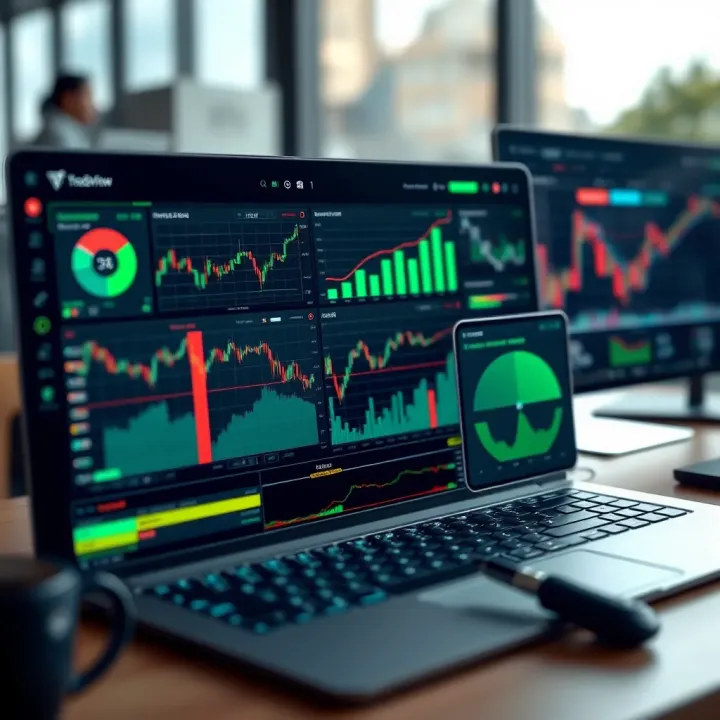
TradingView offers a range of tools essential for Kenyan traders aiming to navigate both local and international markets effectively. These features help users analyse price movements, identify trading opportunities, and manage risk better. By mastering these tools, traders and investors can make more informed decisions rather than relying on gut feelings alone.
TradingView provides various chart types, including line, bar, candlestick, and Heikin-Ashi charts. Candlestick charts are particularly popular among Kenyan traders because they reveal market sentiment clearly through patterns that show price action over time. For instance, spotting a bullish engulfing pattern can signal a potential rise in a stock listed on the Nairobi Securities Exchange (NSE). Bar charts and line charts offer simpler views for quick trend analysis, while Heikin-Ashi smooths out price fluctuations, helping with spotting general trends.
Popular technical indicators such as Moving Averages (MA), Relative Strength Index (RSI), and Bollinger Bands come preloaded. These indicators allow traders to gauge momentum, overbought or oversold conditions, and volatility. For example, an NSE stock trading above its 50-day MA might suggest a bullish trend worth watching. Having these tools readily available saves time and improves the accuracy of trade timing.
Custom indicator options empower users to tailor setups to their strategy. Kenyan traders familiar with coding can use Pine Script, TradingView's scripting language, to create unique indicators or modify existing ones. This flexibility lets traders experiment with different signals, such as combining volume with price action to detect potential breakouts in forex pairs traded locally or through international brokers.
Stock and forex screeners on TradingView help filter assets based on criteria like price movements, volume, and technical indicators. This is valuable for Kenyan investors sifting through hundreds of NSE stocks or forex pairs like USD/KES or EUR/KES. Screeners narrow down candidates for deeper analysis, saving time and focusing effort on assets with better potential.
Setting up price and indicator alerts notifies traders when specific conditions are met. You can, for instance, set an alert when the price of a commodity like petrol or coffee crosses a certain threshold. This ensures you don't miss trade opportunities while you’re away from your computer or busy with other tasks.
Automation and notifications delivered via email, SMS, or smartphone apps keep you in the loop. For example, you might get an alert during a volatile forex session indicating a sharp move in the USD/ZAR pair, helping you respond quickly. These alerts speed up reaction times and reduce the risk of missing out on good trades.
Following other traders on TradingView enables Kenyan users to observe different trading styles and strategies. By tracking experienced users, you gain insights beyond charts and data alone, such as learning how a fellow trader interprets global economic news affecting the NSE.
Sharing ideas and strategies within TradingView’s community allows users to post charts, analysis, or trading plans. This exchange fosters learning and debate, improving your market reading skills. For example, a trader may share a detailed view on coffee prices affecting East African economies, prompting discussions that sharpen your understanding.
Learning from community-generated content helps fast-track experience. Kenyan traders new to forex or equities often pick up tips from shared posts or livestreams, offering practical knowledge rooted in real market conditions. This interactive environment builds confidence and helps prevent costly beginner mistakes.
TradingView’s combination of advanced tools and social features creates a powerful platform for Kenyan traders seeking better market insight and community support.
TradingView offers Kenyan traders and investors a practical platform to monitor local and international financial markets with ease. Being able to track Kenyan assets as well as global forex and commodities makes TradingView a helpful tool for anyone serious about market analysis in Kenya.
TradingView includes several Nairobi Securities Exchange (NSE) stocks and major indices like the NSE 20 Share Index and NSE All Share Index. This allows traders to analyse live charts for firms listed locally such as Safaricom, KCB Group, and Equity Bank. Having these listings on TradingView means Kenyan traders don’t need separate software for local market data and can combine NSE insights with global markets in one place.
However, TradingView does not offer real-time live data for all NSE securities by default. Due to licensing fees and exchange rules, real-time NSE prices may be delayed by 15 minutes or more. To overcome this, traders can subscribe for real-time NSE data through TradingView’s paid plans or link their TradingView accounts to brokers who provide live feeds. This extra step ensures more accurate timing for trade decisions, especially important for active day traders.
Reading NSE charts on TradingView follows the same principles as other stock charts but requires attention to local market context. Kenyan stocks can respond to cyclical events like election times, harvest seasons, or government policy changes. Using TradingView’s technical indicators, such as moving averages and RSI, alongside knowledge of Kenya’s economic calendar helps investors spot buying or selling opportunities specific to local market rhythms.
Forex trading is popular in Kenya, especially for pairs involving the US dollar (USD/KES) or major currencies like EUR/USD and GBP/USD. TradingView covers these pairs and others like USD/JPY or USD/ZAR, offering Kenyan traders detailed charts, trend analysis, and alerts. The USD/KES pair is essential for businesses and investors tracking import/export risks or currency fluctuations impacting everyday costs.
Commodities such as petrol, coffee, and tea influence Kenya's economy and household budgets. TradingView lets traders follow global crude oil prices, which impact local petrol costs, and industrial coffee and tea commodity prices. Tracking these helps farmers, exporters, and investors anticipate price movements and hedge risks effectively using futures or options via proxy instruments.
TradingView’s risk management features help Kenyan traders limit losses and protect gains. Setting up price alerts, stop-loss lines, and custom notifications ensures traders don’t miss critical market moves. For example, a tea exporter could set alerts on coffee prices to decide when to hedge or sell stocks. Combining these tools with local market knowledge supports safer trading and better financial planning.
Using TradingView alongside an understanding of Kenya’s market specifics lets traders improve decision-making, stay updated on global influences, and react promptly to local events affecting prices.
By integrating NSE data, forex, and commodities tracking within one platform, TradingView suits the diverse needs of Kenya’s traders and investors. It bridges local realities with global markets in a straightforward, accessible way.
Understanding TradingView’s pricing plans and payment options is vital for Kenyan traders who want to make the most of the platform without overspending. The choice between free and paid subscriptions affects how many features you access, your trading efficiency, and your ability to customise your tools. Meanwhile, knowing how to pay comfortably with local methods like M-Pesa or credit cards helps avoid payment delays or additional fees.
The free version of TradingView offers basic charting tools, a limited number of indicators per chart, and access to some social trading features. For many Kenyan traders starting out or using the platform for general market analysis, this plan can be enough. For example, you could follow NSE stocks, major forex pairs, and commodities like coffee or tea without any cost. However, this free tier restricts the number of charts you can open simultaneously and does not allow access to advanced alerts or custom indicators.
In contrast, Pro and Premium subscriptions unlock more powerful capabilities. The Pro plan allows multiple charts on one screen, more indicators, and advanced alert systems that notify you based on complex conditions. These features are especially useful if you trade frequently or manage several asset classes at once. The Premium plan takes this further with unlimited custom indicators, priority customer support, and the ability to use intraday interval charts – essential for day traders in fast-moving markets like forex. For example, a Kenyan forex trader using multiple currency pairs simultaneously will find paid plans improve speed and analysis depth.
Choosing the right plan depends on your trading style and needs. If you only check charts occasionally or use TradingView mainly for ideas and news, the free plan suffices. But active traders or investors looking to automate alerts, track detailed asset movements, or require more indicators should consider Pro at least. Premium fits those requiring professional-level tools. It helps to evaluate how many charts and alerts you use monthly before upgrading.
Kenyan users benefit from convenient local options like M-Pesa for subscribing to TradingView. As mobile money dominates daily transactions, M-Pesa makes it easy to pay for monthly or yearly plans without needing international credit cards. Some platforms partner with local payment processors permitting direct M-Pesa payments, allowing seamless subscription purchase direct from your phone. This method avoids currency conversion worries or card rejection issues common for Kenyan traders.
Alternatively, credit or debit cards remain popular for those with international payment-bearing cards from banks like Equity, KCB, or Co-operative Bank. Using Visa or Mastercard-backed cards is straightforward for subscription fees, but customers must ensure their cards are enabled for online or foreign transactions. Some traders experience declines due to security settings or insufficient funds and may prefer topping up M-Pesa wallets as a backup.
Lastly, third-party payment platforms such as PayPal or payment aggregators can also work, though they sometimes incur higher charges or delays. For instance, some brokers or websites linked to TradingView services accept PayPal, which Kenyans with PayPal accounts can use. However, not all platforms support these methods, and verification steps may take time. It's best to check your preferred TradingView plan’s payment options to avoid surprises.
For Kenyan traders, aligning TradingView subscription plans with accessible payment methods like M-Pesa cuts down hassles and ensures uninterrupted market access.
By understanding these pricing and payment options, Kenyan traders can better plan their budget and get more value out of TradingView's versatile tools.
Using TradingView effectively can make a big difference in how well you analyse markets and make trading decisions. This section offers practical advice on customising your workspace, integrating the platform with other tools, and steering clear of common mistakes—helping you get the most out of TradingView.
You can save time by organising your most-used technical indicators in TradingView. For instance, if you regularly check the Relative Strength Index (RSI) or Moving Average Convergence Divergence (MACD) for NSE stocks, add these to your favourites. This way, you avoid scrolling through long lists every time and can focus quickly on signals that matter to your strategy.
TradingView allows you to open several chart layouts simultaneously. This is especially useful if you’re tracking different asset classes such as NSE equities, forex pairs like USD/KES, and commodities like coffee. Separate layouts let you switch between markets or strategies without losing your analysis or having to reset indicators.
If you use different approaches—say, day trading versus long-term investing—you can save templates tailored to each. For example, a short-term template might prioritise volume and momentum indicators, while one for longer trades might focus on moving averages and trendlines. Saving templates avoids repetitive setups and keeps your analysis consistent.
Several Kenyan brokers support linking with TradingView, allowing you to place orders directly from the platform. This integration streamlines your workflow, as you can analyse, plan, and execute trades without bouncing between different systems. For example, some brokers allow real-time syncing of orders and portfolio updates within TradingView.
Many Kenyans prefer M-Pesa for online transactions, including paying for TradingView subscriptions. Making payments through M-Pesa offers convenience and security, especially for traders without international credit cards. You can quickly upgrade your plan to access advanced features without hassles.
TradingView offers alert systems that notify you when specific price levels or indicator conditions are met. You can combine these with automated trading tools for some brokers, enabling swift action. For instance, setting an alert when coffee prices hit a threshold can help you seize opportunities even if you’re away from the screen.
It's easy to get caught up in technical charts and ignore fundamental factors. For example, relying solely on a MACD crossover for a Safaricom stock without considering earnings reports or market news can backfire. Combining both approaches strengthens your trading decisions.
Alerts are helpful but not foolproof. A price alert might trigger during market noise or low liquidity periods, like just before the NSE market closes. It's crucial to verify signals and context before making a trade based on an alert.
TradingView is a powerful tool, but it won't guarantee profits. Some traders expect instant wins by just following indicators. Instead, patience and continuous learning play a bigger role. Use TradingView to support your strategy, not replace disciplined trading habits.
Practical use of TradingView means tailoring the platform to fit your style, integrating it smoothly with your trading setup, and keeping a clear head about its limitations. This balanced approach will help you trade smarter in Kenya's unique market environment.
📈 Master TradingView with this clear guide for Kenyan traders! Learn to set up accounts, customise charts, set alerts, and connect with brokers for stocks, forex & crypto.
Explore Deriv.com for Kenyan traders 🇰🇪. Learn how to trade safely, open accounts, use M-Pesa for payments, and manage risks in online trading effectively.
📈 Learn how derivative trading works in Kenya, its types, benefits, and risks. Get practical tips to invest confidently in stocks, currencies, and commodities.
Explore how to choose the right trading platform for Kenya's market 📈. Learn features, fees, risks, and tips for safe, effective trading with M-Pesa and more.
Based on 10 reviews