
Guide to Online Forex Trading in Kenya
📈 Learn how to trade forex online in Kenya safely with this practical guide. Discover trusted platforms, risk management, legal tips, and solid strategies to boost your trading.
Edited By
James Ellis
Forex trading online has become an accessible way for Kenyans to invest and grow their money using foreign currencies. Unlike the traditional markets, forex runs 24 hours a day, offering plenty of opportunities to trade anytime from Nairobi or Mombasa with just a mobile device or laptop.
The foreign exchange market involves buying one currency and simultaneously selling another, with prices influenced by global events, economic reports, and market sentiment. For example, if you expect the US dollar (USD) to strengthen against the Kenyan shilling (KES), you might buy USD/KES pairs hoping to sell later at a higher price.
Choosing the right trading platform is a key step. Kenyan traders often prefer platforms like MetaTrader 4 and 5 due to their user-friendly interfaces and advanced tools. Local brokers registered with the Capital Markets Authority (CMA) offer added security and compliance with Kenyan regulations, which helps protect you from scams.
Managing risk is essential to avoid heavy losses. Setting stop-loss limits, trading with money you can afford to lose, and avoiding over-leveraging are practical ways to stay safe. Keep in mind that forex leverage can multiply gains but also magnify losses, so use it carefully.
Following Kenya’s rules on forex trading is also necessary. The Capital Markets Authority regulates authorised brokers and requires compliance with anti-money laundering laws. Always verify that your broker is licensed under CMA to avoid illegal trading setups.
Trading forex online is not a get-rich-quick scheme; success comes from knowledge, discipline, and smart decision-making tailored to Kenya’s specific market conditions.
In the sections that follow, we will explore how forex works in detail, review top platforms available in Kenya, discuss realistic risk management strategies, and explain local regulatory requirements. Whether you're just starting or have some experience, this guide is designed to help you trade forex online with confidence and clarity in the Kenyan context.
By the end, you will have practical tips to make informed trades, maximise profits, and avoid common pitfalls in the forex market.
Grasping the basics of forex trading is the first step for anyone interested in trading currencies online in Kenya. It’s essential because forex trading can be quite volatile; without a clear understanding, you risk losing your hard-earned KSh. This section breaks down what forex trading is, how it works globally and within Kenya, and the currency pairs popular among Kenyan traders.
Forex trading means buying and selling currencies to make a profit from changes in their exchange rates. The forex market is the largest financial market worldwide, with trillions of dollars changing hands daily. In practical terms, if you believe the US dollar will gain strength against the Kenyan shilling, you buy USD/KES; if the shilling rises instead, you could sell it to make gains. Unlike buying stocks, forex trades operate 24 hours daily across different time zones, allowing Kenyan traders to act anytime.
Forex markets function through a network of banks, brokers, and traders around the world. Globally, trading happens over-the-counter (OTC), meaning there's no central exchange, unlike the Nairobi Securities Exchange (NSE). Instead, trades connect through electronic platforms. Kenyan traders often access international brokers licensed by authorities such as the Capital Markets Authority (CMA) or global regulators.
Locally, the Kenyan market doesn’t set forex prices; they follow the global market movements. Still, local factors influence the KSh, like the Central Bank of Kenya’s monetary policy, trade balances, and political events. For instance, an election period can cause more volatility in KSh exchange rates, offering both risk and opportunity.
Kenyan forex traders mostly focus on currency pairs involving the shilling and major global currencies like the US dollar (USD), euro (EUR), and British pound (GBP). Common pairs include:
USD/KES: The most traded pair due to strong trade links with the US.
EUR/KES: Important for traders watching European economic news.
GBP/KES: Popular as Kenya has historical and trade links with the UK.
USD/EUR: Though it doesn’t involve the shilling, many traders speculate on this pair owing to its liquidity.
These pairs fluctuate daily because of economic reports, Central Bank announcements, and geopolitical events, so keeping an eye on such developments is crucial.
Understanding these basics helps you approach forex with realistic expectations and more confidence. It’s not just guessing currency moves; it’s about knowing what affects prices and applying that knowledge carefully.
In the next sections, we will look at how to choose the right platform to start trading and managing risks effectively in the Kenyan forex market.
Choosing the right online forex trading platform stands at the heart of trading success. A reliable platform not only ensures smooth execution of trades but also safeguards your funds and personal details. In Kenya, where online scams are a well-known risk, selecting a trustworthy broker and platform cannot be overstated. Beyond trust, the platform must fit your trading style and technical needs to give you an edge in the fast-moving currency markets.
When scouting for a trading platform, focus on usability and security. The interface should be intuitive, enabling you to place and close trades quickly—especially useful during volatile market hours like London or New York sessions. Real-time price feeds and accurate charting tools are essential; lagging data can cost you dearly in forex.
Secondly, make sure the platform offers robust risk management features like stop-loss and take-profit orders. This helps you control potential losses and lock in profits without having to watch the screen all day. Also, check if the platform supports mobile trading, since many Kenyans prefer managing their accounts on the go via smartphones.
A few forex brokers have built solid reputations in Kenya. For example, XM and HotForex are well-known for their localised customer support and straightforward registration processes. These brokers offer access to popular platforms like MetaTrader 4 (MT4) and MetaTrader 5 (MT5), which are staples in forex trading worldwide.
Another broker worth mentioning is Exness. It allows low minimum deposits and provides flexible leverage options—features especially attractive to beginner traders in Kenya. Always verify that your chosen broker is regulated by Kenya’s Capital Markets Authority (CMA) to ensure compliance and protection.
Kenyan traders need convenient and quick ways to fund their accounts and withdraw earnings. Most reputable brokers accept M-Pesa, which is a popular method due to its widespread use and ease of transactions across Kenya. You’ll also find options for bank transfers and card payments.
Remember to check how long deposits and withdrawals take. Some brokers process M-Pesa deposits instantly but may take longer to handle withdrawals. Also, watch out for extra fees from either the broker or the payment service. Transparency here can save you unexpected costs.
Selecting a broker who supports familiar payment methods like M-Pesa and offers swift withdrawal options can greatly improve your trading experience and cash flow management.
In summary, a good forex trading platform combines ease of use, strong security, and features suited to your trading needs. Pair that with a reliable broker regulated in Kenya, and you set yourself up well to trade with confidence and clarity.
Mastering effective strategies is the backbone of success in forex trading. For Kenyan traders, blending clear techniques with disciplined execution can protect your capital while improving your chances of steady profits. This section breaks down the main components every trader should understand to build a resilient trading approach.
Fundamental analysis involves evaluating economic indicators, political events, and central bank policies to predict currency movements. For example, a rise in Kenya's inflation rate announced by the Central Bank of Kenya (CBK) could lead traders to anticipate a shift in the shilling’s value. Meanwhile, technical analysis studies historical price charts, patterns, and trading volumes to identify entry and exit points. A local trader might use moving averages or support and resistance levels on a platform like MetaTrader to time trades.
Successful traders often combine these approaches: fundamentals provide the "why" behind market moves, while technicals help with the "when". Relying only on one method can leave you exposed, especially in a volatile market affected by factors like fluctuating global commodity prices impacting Kenya’s economy.
Managing risk is essential to avoid losing more than you can afford. Tools such as stop loss and take profit orders automate protection by closing your trade at predetermined price levels. For instance, if you buy the USD/KES pair at KS10 and set a stop loss at KS08, your trade closes automatically if the price drops, limiting losses.
Other practices include diversifying trades across different currency pairs and limiting single-trade risk to a small percentage of your account balance, commonly 1–2%. Keeping a trading journal helps track what works and what doesn’t, making your approach more disciplined and less emotional.
Good risk management is the gatekeeper of your trading capital. Without it, even the best strategies can fail.
Leverage lets you control a big position using a small amount of capital. Kenyan forex brokers might offer leverage ratios from 1:10 up to 1:200. While this can magnify profits, it also increases potential losses. For example, with KS0,000 and 1:100 leverage, you control KS,000,000 worth of currency, but a small market move against you can wipe out your investment fast.
Use leverage carefully: start small and increase only when you gain confidence and understand the risks. Regulatory authorities, like the Capital Markets Authority (CMA) in Kenya, often recommend conservative leverage limits to protect traders from excessive risk.
In summary, a solid forex strategy in Kenya starts with combining fundamental and technical analysis, applying strict risk management, and handling leverage with care. These techniques help you navigate market ups and downs and improve your chances of profitable trading over time.
Understanding the legal framework for forex trading in Kenya is vital for any trader who wants to operate safely and avoid unnecessary pitfalls. The financial markets here are regulated to protect investors and maintain market integrity. Without observing these regulations, traders risk falling prey to scams or unlicensed brokers, which can lead to significant financial losses.
The Capital Markets Authority (CMA) is the main regulator responsible for supervising forex trading and capital markets in Kenya. Its role is to set clear rules for brokerage firms, trading platforms, and individuals who wish to engage in forex trading. CMA ensures that licensed brokers meet operational standards like transparency, security of client funds, and fair dealing practices.
Every legitimate forex broker in Kenya must be authorised by the CMA. For example, if you find a broker claiming to operate in Kenya but lacks CMA licensing, it should raise immediate red flags. The CMA also provides investor education programmes to help Kenyans understand forex markets and their risks better. Its oversight contributes towards building trust and confidence in the local market by cracking down on firms that flout regulations.
Forex scams have become common due to the market’s lucrative image. Kenyan traders need to be especially alert for signs of fraud, such as promises of guaranteed profits, pressure to invest quickly, or brokers who are not transparent about fees or risks.
To avoid scams, always check if the broker appears on the CMA’s official list of authorised dealers before opening an account. Legitimate brokers will usually have clear information about their regulation status and offer secure methods for depositing and withdrawing funds—common options include M-Pesa, bank transfers, and card payments. Beware of brokers who demand large upfront fees or refuse to provide proof of registration.
Another practical tip is to look out for brokers with transparent communication and those who invite verification through independent sources or trading reviews from trusted Kenyan financial portals. Start with a demo account to test their platform and withdrawal process without risking your money.
Staying informed about legal requirements and choosing CMA-regulated brokers not only protects your capital but also helps you trade with peace of mind in Kenya’s growing forex market.
By focusing on these legal considerations, Kenyan traders can navigate forex markets more confidently and avoid common traps that have ruined many inexperienced investors. Always remember, a legally compliant and transparent broker is a key foundation for long-term success in trading.
Getting started with forex trading online can feel like stepping into a busy matatu stage — crowded and full of noise. Practical steps are crucial to help you trade wisely and avoid avoidable mistakes. This section guides you through setting up your trading account, picking a style fit for your time and tolerance for risk, and using demo accounts to sharpen your skills without risking real money.
Opening a trading account is your first step into forex markets. Choose a broker regulated by the Capital Markets Authority (CMA) to ensure your funds and data remain safe. The process typically involves submitting a copy of your Kenyan ID or passport, proof of residence such as a utility bill, and sometimes a fillable application through the broker’s website or app.
Most brokers offer individual and corporate accounts. For a beginner, an individual account suffices. Watch out for accounts with low minimum deposits, sometimes as little as KS,000. This lets you start small and test the waters. Remember to link your account to a payment method convenient in Kenya — M-Pesa remains one of the easiest for deposits and withdrawals.
Not every trading style suits every person. Your style should match your daily routine and how much risk you can stomach. For example, if you’re busy with a 9-to-5 job or hustling in the jua kali sector, scalping or day trading that requires constant screen time might not work well.
Swing trading could be better for such traders — it involves holding positions for several days or weeks, allowing you to check the market less frequently. On the other hand, if you can stare at charts and news all day, you might be happy with day trading or scalping. Also, be clear about your risk tolerance; never risk more money than you can afford to lose. KSh 5,000 might be a small risk for one trader but a big one for another.
Demo accounts are like training grounds without the pressure or loss. Most online forex platforms offer free demo accounts where you get virtual money to practise trading. Use these to understand how the platform works, experiment with different strategies, and observe how the forex market reacts to various events.
Spend time here before putting your KSh on the line. For instance, if you practise swing trading on a demo account, try holding trades over a few days to see what kind of stops and limits work best in Kenya’s unique market conditions, considering factors like news on the shilling or regional political shifts.
Starting carefully with these steps can save you from common pitfalls and build confidence. Always remember, forex trading is not a quick way to riches but a skill honed over time.
These practical tips will give you a solid foundation and improve your chances of trading well in Kenya’s forex scene.
📈 Learn how to trade forex online in Kenya safely with this practical guide. Discover trusted platforms, risk management, legal tips, and solid strategies to boost your trading.
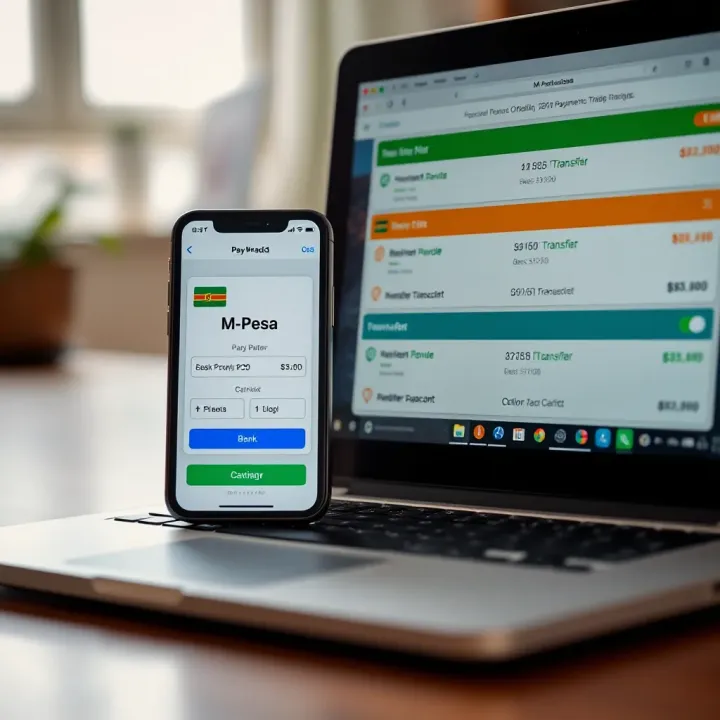
📈 Learn practical steps to trade online in Kenya safely using M-Pesa, bank options, and trusted platforms. Understand risks, regulations, and tips for success. 💻🇰🇪
📊 Master forex trading in Kenya with practical courses covering basics, choosing programmes, and applying skills in our local financial scene using M-Pesa and market insights.
📈 Explore Quotex, an easy digital options platform with simple setup, M-Pesa payments, and local strategies for Kenyan traders to boost skills while managing risks well.
Based on 5 reviews