
AUD/USD Forecast: Key Trends and Influences Explained
Explore AUD/USD trends, key economic factors, and market sentiment affecting the pair 🇦🇺🇺🇸. Get practical tips for confident trading decisions 📈💡.
Edited By
Benjamin Harris
The US Dollar (USD) to Kenyan Shilling (KSh) exchange rate plays a significant role in Kenya’s economy. Many businesses, investors, and individuals rely heavily on this rate to make informed financial decisions. Understanding the trends and factors that influence the USD-KSh rate helps you predict movements and plan ahead.
Exchange rates do not move randomly; they respond to a variety of economic, political, and international events. For example, Kenya’s trade balance, inflation levels, and foreign reserves affect the shilling’s strength against the dollar. Similarly, actions by the US Federal Reserve, such as interest rate changes, also impact the value of the USD regionally and globally.
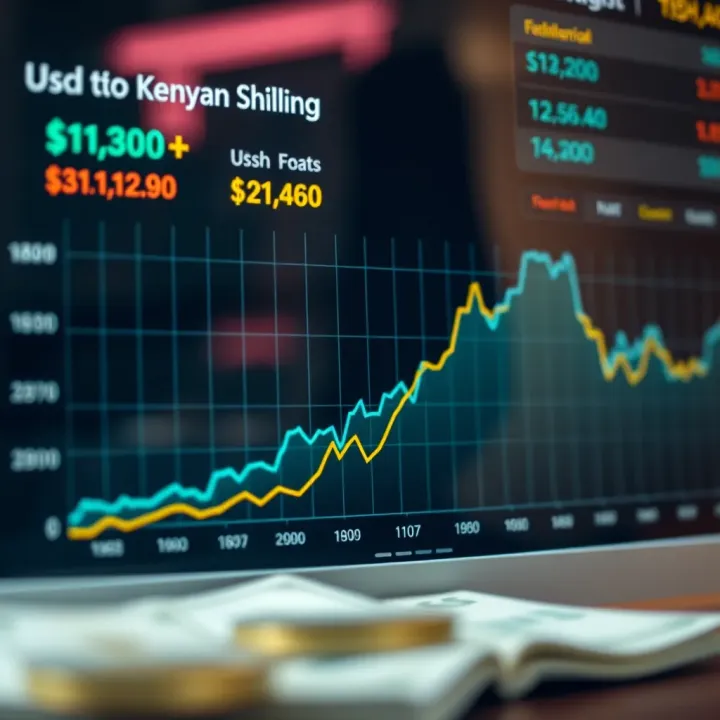
The ripple effect of USD fluctuations on Kenya’s economy is evident, especially in import costs, loan repayments, and remittance flows.
Economic Indicators: Kenya’s inflation rate, GDP growth, and balance of payments give clues about the shilling’s health. A rising inflation rate usually means the shilling weakens.
Government Policies: Decisions on interest rates by the Central Bank of Kenya, fiscal policies, and foreign exchange controls shape currency dynamics.
Global and Regional Events: Crises, trade tensions, or recovery in major economies like the US, China, or within the East African region can shift investor confidence and capital flows, impacting USD-KSh.
In recent years, the Kenyan shilling has seen periods of both stability and volatility. For example, during the 2020 COVID-19 pandemic, the shilling weakened sharply due to disrupted trade and reduced remittances. However, recovery efforts and increased foreign investment later helped stabilise the rate.
Forecasting exchange rates requires considering various moving parts. While it’s hard to pin down exact numbers, expect the USD-KSh rate to remain sensitive to:
Central Bank policies both in Kenya and the USA
International commodity prices, especially oil
Political developments at home and in key trading partners
This article will guide you through these aspects, clarifying how they influence the USD to KSh exchange rate and what precautions you should take when dealing with USD-KSh transactions either as a trader, investor, or business professional.
Understanding the current state of the USD to KSh exchange is essential for traders, investors, and businesspeople. It provides a snapshot of where the currency pair stands now, which helps in making decisions about imports, exports, and financial planning. For example, a Kenyan exporter to the US needs to know the prevailing rates to predict how much revenue will translate back home. Similarly, investors watching currency shifts can adjust their portfolios to avoid losses or seize gains.
Over the past year, the Kenyan Shilling has mostly traded within the range of KSh 110 to KSh 118 against the US Dollar. The rate has experienced periods of gradual depreciation, often influenced by changes in Kenya’s current account deficit and foreign exchange inflows. For instance, during the harvest season when agricultural exports peak, the shilling often strengthens slightly due to increased forex inflow. Conversely, during periods of political tension or global shocks, the shilling tends to lose ground.
This movement is relevant for businesses dealing in imports or remittances, as even small fluctuations affect cost structures and cash flows. An importer relying on USD to pay for goods will watch these trends closely to decide when to transact.
Recent volatility has stemmed from several sources. On the domestic front, political uncertainty in the run-up to elections has created periods of jitteriness in the forex market. For example, in the months leading to August 2022 elections, the KSh faced heightened pressure.
On the international side, shifts in US Federal Reserve policies and global commodity price swings have fed into fluctuations. The Fed's unexpected interest rate hikes caused a stronger dollar overall, which translated to a weaker KSh. This is important for traders using short-term strategies because sudden movements can mean losses or profits within days or weeks.
Looking back over the past decade, the Kenyan Shilling has generally weakened against the US Dollar. From roughly KSh 80 per USD ten years ago, it has moved to near KSh 115 today. This gradual depreciation reflects underlying structural factors, including persistent trade deficits and foreign debt servicing needs.
For investors with longer time horizons, this trend underscores the importance of considering currency risk when investing in Kenyan assets. A local firm's dollar-denominated debt, for example, becomes costlier as the shilling weakens.
There have been notable spikes in depreciation during times of crisis. In 2011, the KSh dropped sharply due to the combined impact of domestic political unrest and reduced foreign investment. Similarly, the onset of the COVID-19 pandemic in early 2020 saw the shilling lose ground rapidly amidst global economic uncertainty.
On the flip side, brief periods of appreciation occur when foreign exchange inflows surge, such as increased diaspora remittances during festive seasons or large foreign investments announced in the country. These sharp shifts are critical moments for currency traders and businesses to review their risk exposure.

Keeping track of the current state and recent trends in the USD to KSh exchange provides a necessary foundation before examining forecasts and impacts. Real-time knowledge helps in crafting better financial strategies tailored to Kenya’s unique economic context.
Exchange rate trends influence import pricing and export revenues.
Volatility often reflects domestic political events and international policy changes.
Long-term depreciation signals structural economic challenges.
Sharp currency moves provide opportunities and risks for traders.
This knowledge is key for anyone dealing in USD-KSh transactions or analysing Kenya’s economic outlook.
Understanding what moves the USD to KSh exchange rate helps traders, investors, and businesses make informed decisions. Various economic, political, and global aspects each play a distinct role in shaping the currency's value against the Kenyan Shilling.
Inflation rates in Kenya and the US influence purchasing power directly. If Kenya’s inflation rate rises faster than in the US, the Shilling may weaken as local goods become relatively more expensive, prompting imports priced in USD to cost more. For example, when Kenya experiences high inflation due to increased fuel prices during the long rains season, the Shilling often suffers pressure. Conversely, lower inflation in the US relative to Kenya tends to strengthen the USD against the Shilling.
Interest rates and Central Bank policies determine how attractive each country’s currency is to investors. When Kenya’s Central Bank raises interest rates to curb inflation, it draws more foreign capital seeking higher returns, which can support the Shilling. On the other hand, if the US Federal Reserve adjusts its rates, especially upwards, it tends to pull investments back to the US, causing the USD to gain strength. Businesses and financial analysts closely watch these shifts to anticipate exchange rate moves.
Balance of trade and current account describe the flow of goods and services between Kenya and the world. A trade deficit, where Kenya imports more than it exports, increases demand for USD, exerting downward pressure on the Shilling. For instance, Kenya’s imports of fuel and machinery often cause short-term dips in the Shilling. Meanwhile, increased exports like tea and horticulture products can improve foreign currency inflows and stabilise the exchange rate.
Government policies affecting currency stability can range from fiscal discipline to foreign exchange management. For example, Kenya’s efforts to increase tourism earnings or diversify exports help stabilise the Shilling. Policies promoting sound public finances or reducing debt limit depreciation risks, while excessive borrowing or unclear policies often scare investors and push the Shilling down.
Elections and political stability are critical for investor confidence. Around the election period, uncertainty can cause currency volatility. The 2017 Kenyan general elections saw short-term Shilling dips amid political tensions. Stability reassures foreign investors and businesses, encouraging them to keep capital flows steady, which in turn supports currency strength.
Regulatory measures and foreign exchange controls impact how freely currency moves in and out of the country. Measures like restrictions on forex trading or tight reserve requirements may limit volatility but also discourage capital inflows. Kenya’s recent move to tighten KRA’s monitoring on cross-border transactions exemplifies how regulation can affect forex liquidity and exchange rate behaviour.
Impact of US economic performance and policies is significant because the USD acts as a global reserve currency. Strong US growth or hawkish Federal Reserve policies often attract global capital, pushing the USD higher against the Shilling. Shifts in US trade agreements or sanctions can indirectly ripple through the Kenyan economy, affecting import costs and investment inflows.
Global commodity prices and their effect matter since Kenya imports fuel and some raw materials priced in USD. A rise in global oil prices directly increases Kenya’s import bill, weakening the Shilling due to higher USD demand. Conversely, higher coffee or tea prices can boost export earnings, easing pressure on the currency.
International events and geopolitical risks such as conflicts, pandemics, or trade wars create uncertainty that typically strengthens the USD as a safe haven. During such times, the Kenyan Shilling tends to weaken as investors prefer USD liquidity. For instance, global supply chain disruptions have historically led to more volatile USD-KSh movements.
Keeping an eye on these factors allows traders and businesses to anticipate exchange rate shifts and manage risks accordingly. The dance between local and global events shapes the USD to KSh value day by day.
Understanding the forecast for the USD to KSh exchange rate helps traders, investors, and businesses plan ahead and manage risks. Knowing what to expect in the short and medium term can guide decision-making on purchases, investments, and pricing strategies. For example, an importer anticipating KSh weaknesses against the dollar might adjust order timings or hedge their currency exposure.
Over the next six months, the USD-KSh exchange rate will likely experience modest fluctuations influenced by several local and international factors. Kenya’s economic indicators such as inflation rates, Central Bank policies, and trade balances will play a considerable role. If inflation in Kenya remains steady around 6%, while the US Federal Reserve shifts interest rates, the Shilling could see gradual depreciation against the Dollar.
That said, these short-term trends matter a lot for businesses which regularly import goods priced in dollars. A rise of even a few shillings in the exchange rate can increase landed costs for raw materials or finished products, affecting pricing and profit margins. Traders often watch Central Bank announcements closely to catch early signs of new policy moves.
Potential triggers for volatility include unexpected political events like election period jitters or sudden regulatory changes. For instance, if parliamentary debates introduce new foreign exchange controls, this could temporarily unsettle the market. On the global side, shifts in US Treasury yields or sudden commodity price swings—say in crude oil—can also cause sudden jumps in the USD-KSh rate.
For financial analysts, these triggers mean keeping a close eye on news feeds and market sentiment is key. Volatility might offer trading opportunities but also risks losses where the rate swings sharply within days or weeks.
Looking one to two years ahead, the USD to KSh forecast depends heavily on broader economic reforms in Kenya and the wider investment climate. If Kenya successfully implements structural reforms aimed at improving economic growth and enhancing export capacity, it can stabilise the Shilling against the Dollar. Likewise, if the US economy slows down or adjusts monetary policy, this affects dollar strength and exchange rates globally.
Additionally, foreign direct investment (FDI) and portfolio inflows into Kenya will shape currency values. Increased investment usually means more demand for the shilling, which can support its value. For example, if the Nairobi Securities Exchange (NSE) attracts more foreign investors seeking growth from sectors like manufacturing or tech, the shilling might strengthen or at least avoid sharp declines.
Economic reforms that improve business environment, reduce corruption, or upgrade infrastructure also tend to build investor confidence. This helps maintain steadier capital flows and lowers the chances of abrupt currency shocks. Entrepreneurs and exporters in Kenya should follow policy developments closely since gradual improvements often reflect in exchange rate trends over the medium term.
Predicting exchange rates is rarely exact, but understanding the key influencers allows you to make smarter, informed decisions that protect your investments and business operations from unexpected currency swings.
In summary, the short-term forecast for USD-KSh points to cautious movements with risks of volatility, while the medium-term outlook depends on economic reforms and investment inflows that can stabilise or strengthen the Kenyan Shilling.
Changes in the USD to KSh exchange rate have a direct impact on Kenyan businesses and consumers. Understanding these effects helps traders, entrepreneurs and investors make informed decisions, manage costs, and seize opportunities in a market where currency value shifts frequently. Let’s look at how fluctuations affect various sectors and practical ways people adapt.
Cost fluctuations for goods and raw materials
When the US Dollar strengthens against the Kenyan Shilling, importers face higher costs for goods priced in USD. For example, a Kenyan retailer stocking electronics sourced from the US will pay more KSh to buy the same amount of products, squeezing profit margins unless prices are adjusted. Conversely, a weaker dollar lowers import costs but can reduce the local appeal of foreign products due to rising competition from domestic options.
Exporters, on the other hand, may benefit from a weaker shilling because their products become cheaper and more competitive in the US market. For instance, a Kenyan tea exporter might see increased demand if the USD appreciates relative to the KSh, making their shipments more affordable for buyers paying in dollars.
Strategies for managing currency risk
Businesses often use hedging tools to protect against sudden exchange rate swings. Forward contracts allow importers or exporters to lock in an exchange rate for future transactions, helping plan costs and revenues. For instance, a manufacturing firm anticipating USD payments in three months might fix a rate today to avoid losses from a shilling depreciation.
Also, companies diversify their supply chains and payment currencies to reduce dependence on the USD-KSh exchange rate. Some may negotiate payment in Kenyan Shillings or Euros, or source raw materials from countries with more stable trading terms. Practical risk management aids financial stability despite currency volatility.
Effect on Kenyan travellers and tourism costs
For Kenyans travelling abroad, a stronger USD means higher costs for flights, accommodation, visas, and daily expenses. A KSh decline against the dollar tightens travel budgets and can reduce the frequency or duration of trips. Conversely, inbound tourism to Kenya might benefit from a weaker shilling, as visitors can enjoy relatively cheaper services and goods, boosting the local hospitality sector.
Remittance values and household incomes
Many Kenyan families rely on remittances sent from relatives working abroad, often in US Dollars. When the shilling weakens, the same amount of USD converts to more KSh, raising household income and purchasing power. However, a stronger shilling reduces remittance value, squeezing budgets for daily necessities. Since remittances represent a significant source of foreign exchange, these shifts influence overall economic activity.
Investor confidence and capital flows
Exchange rate stability plays a major role in shaping investor decisions. Significant volatility or a depreciating shilling might scare off foreign direct investment, as investors worry about returns being eroded by currency losses. Stable or appreciating KSh encourages investment inflows, especially in sectors like manufacturing, real estate, and financial services.
Additionally, foreign portfolio investors on the Nairobi Securities Exchange (NSE) watch exchange movements closely. Sudden shilling depreciation may trigger sell-offs if investors want to avoid currency risk. Clear policies and predictable trends help maintain investor confidence and smooth capital flows.
Currency movements echo through many layers of Kenya’s economy, so businesses and consumers alike need to stay alert and adapt strategies accordingly to handle USD-KSh changes effectively.
Managing USD-KSh transactions wisely is vital for businesses and investors who operate between Kenya and the United States. Exchange rates fluctuate due to various factors, and knowing how to navigate these changes can save significant costs and reduce financial risks. For instance, importers who buy raw materials priced in dollars face higher costs when the shilling slides against the dollar. Meanwhile, exporters benefit when the USD strengthens, but without proper management, unpredictable swings can harm profitability.
Monitoring market signals involves keeping an eye on economic indicators like inflation data, Central Bank policies, and global developments affecting the USD-KSh rate. Traders and businesses in Kenya often watch Kenya Revenue Authority (KRA) announcements or Central Bank of Kenya (CBK) monetary policy updates to anticipate currency shifts. For example, news of a US Federal Reserve interest rate hike typically strengthens the dollar, possibly weakening the shilling. Being alert to such signs helps you time your currency exchanges better rather than acting hurriedly during sudden swings.
It's also practical to watch political events or scheduled releases of economic figures like Kenya's GDP growth or inflation rates. These can hint at near-term currency movements allowing businesses to plan payments or receipts cautiously.
Using mobile and bank platforms effectively has become more important as M-Pesa and mobile banking services have made currency exchange more accessible. Many Kenyans now rely on bank apps or mobile platforms to buy dollars or convert Shillings, enabling quick reactions to favourable rates. For instance, if a trader sees the USD-KSh rate improve early morning, they can execute the transaction immediately without visiting physical forex bureaus.
Besides convenience, these platforms often offer real-time rates and notifications. Safaricom’s Lipa Na M-Pesa and KCB M-Pesa, for example, provide ways to handle payments and currency exchange digitally, reducing delays that might expose users to poorer rates later.
Forward contracts and hedging options allow businesses to lock in an exchange rate today for a future date, shielding against unexpected currency falls or rises. For large importers or exporters, this tool is invaluable. Suppose a Kenyan importer expects to pay US$50,000 in three months. By agreeing on a forward contract at today’s rate, they avoid paying more shillings if the dollar strengthens within that period.
While forward contracts reduce uncertainty, they require planning and may incur some costs. Some banks and financial institutions offer customised hedging tailored to client needs, which businesses should explore to match their risk appetite.
Role of financial institutions and forex bureaus cannot be overstated in managing USD-KSh transactions. Banks like Equity Bank, KCB, or Co-operative Bank offer foreign exchange services with varied pricing based on volume and customer profile. Forex bureaus provide alternatives for smaller transactions, often with competitive rates and less paperwork.
Financial institutions also guide clients on managing currency risk, offering advisory services on market conditions and suitable forex products. For instance, brokers might advise setting limits or stop-loss orders to mitigate severe losses during volatile periods.
Knowing when and how to convert currency, coupled with the right risk management tools and trustworthy institutions, empowers Kenyan businesses and investors to navigate USD-KSh fluctuations confidently and cost-effectively.
Explore AUD/USD trends, key economic factors, and market sentiment affecting the pair 🇦🇺🇺🇸. Get practical tips for confident trading decisions 📈💡.

📉 Explore detailed AUD to USD exchange rate forecasts and analysis with insights on historical trends, economic impacts, and key market drivers for smart trading decisions.

Explore delivery services in Kenya 🚚: types, challenges, tech advances, and tips for businesses & consumers to thrive in a changing market 📦.

📈 Explore Bitcoin price trends, expert views, risks & market factors shaping Kenya's crypto scene. Stay informed on what's next for BTC value!
Based on 7 reviews