
AUD to USD Exchange Rate Forecast and Analysis
📉 Explore detailed AUD to USD exchange rate forecasts and analysis with insights on historical trends, economic impacts, and key market drivers for smart trading decisions.
Edited By
Sophie Clarke
When working with the AUD/USD currency pair, it's easy to get lost in numbers or sudden market shifts without fully grasping the bigger picture. This pair isn't just about exchange rates fluctuating randomly; it's about the tug-of-war between Australia's economy and the U.S. dollar's strength, shaped by countless factors both straightforward and subtle.
Understanding what moves the AUD/USD can mean the difference between making a shrewd trading move or simply guessing and hoping for the best. Whether you're a seasoned trader or just stepping into currency markets, knowing where to look — from economic reports to global political events — helps you spot trends early and avoid costly missteps.
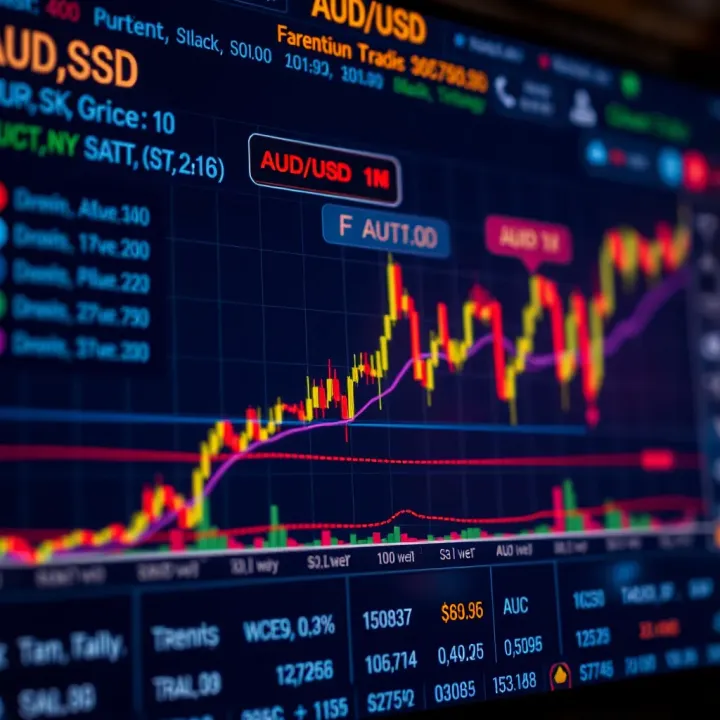
This article breaks down those influences, giving you practical insights into key economic indicators, market moods, and forecasting techniques that actually work. Plus, it'll cover how real-world events impact this pair, helping you make informed decisions rather than reacting to noise.
Trading the AUD/USD is less about luck and more about understanding the story behind those numbers — the forces pulling and pushing this pair every day.
Let’s jump in, kick off with the basics of what drives the pair’s movement, and build up to savvy forecasting strategies you can use right now.
Understanding the AUD/USD currency pair is essential for traders and investors dealing with foreign exchange markets. This pair represents the exchange rate between the Australian dollar and the United States dollar, two of the most commonly traded currencies worldwide. Knowing its behavior helps market participants make informed decisions, especially because this pair reflects not only currency values but also broader economic and geopolitical shifts.
The value of the AUD/USD pair is influenced by factors ranging from commodity prices to interest rate decisions by the US Federal Reserve and the Reserve Bank of Australia. Traders keeping an eye on this pair often use it as a gauge for risk sentiment, given Australia's status as a resource-rich country tied to commodity exports and the US dollar's role as a global reserve currency.
At its core, the AUD/USD currency pair shows how many US dollars one Australian dollar can buy. For example, if the pair is quoted at 0.70, it means 1 Australian dollar equals 0.70 US dollars. This rate fluctuates constantly in response to supply and demand in the foreign exchange market.
What's interesting about AUD/USD is its reflection of economic dynamics between two very different economies. Australia leans heavily on commodity exports like iron ore and coal, while the US dollar often moves based on broader factors like Federal Reserve policy and global risk appetite. For traders, the pair is a way to express views on the relative strength or weakness of these economies.
The AUD/USD pair has a rich history shaped by global economic events and internal policy shifts. For much of the 20th century, the Australian dollar was relatively stable against the US dollar due to fixed exchange rate systems. However, since Australia's move to a floating exchange rate in the 1980s, the AUD/USD rate has been more volatile, reflecting market forces directly.
One notable period was during the 2008 global financial crisis, when the AUD dropped sharply against the US dollar as risk aversion surged. More recently, periods of commodity price booms, like the mining boom of the early 2010s, saw the Australian dollar strengthen significantly versus the US dollar.
Looking back on these historical shifts provides valuable context for today's traders. It underscores that movements in the AUD/USD aren't random but deeply tied to economic cycles, policy interventions, and global market temperament.
Recognizing the history and representation of the AUD/USD pair equips traders with a grounded understanding, essential for interpreting market moves and predicting future trends.
This section lays the foundation for grasping deeper influences and forecasting methods that come later in the article, making it a critical starting point for anyone interested in this currency pair.
Understanding what moves the AUD/USD pair is essential because it helps traders anticipate changes and avoid surprises. The Australian dollar isn’t just a number on a screen — it’s tied closely to the economic health of Australia, the United States, and global forces. When you grasp the main factors influencing this currency pair, you’re better equipped to navigate the choppy waters of forex trading.
Economic indicators from both countries paint a clear picture of their financial well-being, directly impacting the AUD/USD exchange rate.
Gross Domestic Product (GDP) growth shows how fast a country’s economy is expanding. If Australia’s GDP shoots up, it suggests more money circulating, businesses growing, and jobs being created — pushing the AUD higher. Conversely, if the US GDP outpaces Australia's, the USD tends to strengthen against the AUD. Traders often watch quarterly GDP reports; for example, Australia's March quarter GDP beating expectations might spur AUD/USD gains.
Employment figures, especially the unemployment rate and payroll numbers, reveal labor market health. Low unemployment in Australia signals a strong economy and potentially higher interest rates, which attracts investment into the AUD. Meanwhile, robust US job growth can boost the USD. A concrete instance: when Australia reported a surprise drop in unemployment last July, it lifted the Aussie dollar meaningfully against the greenback.
Inflation gauges how prices for goods and services rise. Moderate inflation tells central banks that the economy is running smoothly, but runaway inflation can lead to higher interest rates. For AUD/USD, if Australian inflation rises faster than U.S. inflation, it might prompt the Reserve Bank of Australia to tighten monetary policy, strengthening the AUD. Keep an eye on the Consumer Price Index (CPI) reports; unexpected inflation jumps sway the currency markets notably.
The Australian economy heavily depends on commodities, and their prices can move the AUD/USD rate significantly.
Australia is a leading exporter of iron ore and coal. When prices for these commodities spike — say, due to supply shortages or increased demand in China — the AUD typically benefits. Higher export revenues mean stronger economic prospects and investor confidence. For example, a sudden surge in iron ore prices last year led to a noticeable jump in the AUD/USD pair.
Beyond just prices, the overall global appetite for commodities matters. If countries like China, Japan, or South Korea ramp up imports, it signals greater demand for Australian resources, thereby propping up the AUD. During times of global economic slowdown, demand dips, pulling the Australian dollar down. Traders should monitor economic health in Asia closely since a lot of AUD movements connect back to those markets.
The Federal Reserve’s decisions on interest rates and monetary policy send ripples through the AUD/USD market. When the Fed tightens policy with interest hikes, the USD often rises as investors seek better returns, which can cause AUD/USD to fall. On the other hand, if the Fed signals a pause or cut in rates, the USD may weaken, giving the AUD some breathing room. Recent Fed meetings often cause sharp volatility, so traders watch announcements closely.
The AUD is often seen as a "risk-on" currency, meaning it tends to do well when investors are optimistic and willing to take risks. In times of global uncertainty or market fear, the USD’s safe-haven status can pull AUD/USD lower.
Quick takeaway: When traders get jittery about global events or economic slowdowns, they flock to the USD, pushing AUD/USD down; when confidence returns, the Aussie bounces back.
In sum, movements in the AUD/USD are like a dance of many factors, including economic health, commodity trends, Fed policies, and how traders feel in the moment. Staying aware of these elements can give you an edge in predicting which way this currency pair might swing.

When it comes to predicting movements in the AUD/USD pair, having a clear approach is vital. This currency pair is influenced by a boatload of variables, from economic data to geopolitical developments, so relying on just one method is like trying to catch fish with a single net. Traders need a blend of tools to get a clearer picture.
There are three main ways to go about forecasting AUD/USD: technical analysis, fundamental analysis, and sentiment analysis. Each sheds light on different aspects — technical analysis looks at price and volume patterns, fundamental analysis digs into economic indicators and central bank moves, while sentiment analysis gauges the mood of the market. Understanding these methods doesn’t just help avoid blind spots but also boosts the chances of making solid trades.
Chart patterns are the bread and butter of technical analysis. These shapes and formations — like head and shoulders, double tops, or triangles — help traders spot potential reversals or continuations in price. For instance, spotting a “double bottom” in AUD/USD can signal the dip is nearing an end, potentially setting the stage for a rise. Recognizing these patterns early gives traders a slight edge to enter or exit trades before the crowd catches on.
Moving averages smooth out price data to help traders spot trends over time. The simple moving average (SMA) or exponential moving average (EMA) are popular tools for this. Let’s say the 50-day moving average crosses above the 200-day — a signal often called a “golden cross” — it suggests bullish momentum in the AUD/USD. Traders use such signals to time their trades, aiming to ride trends rather than fighting them. Importantly, moving averages also act as dynamic support or resistance levels, guiding stop loss placement.
In addition to chart patterns and moving averages, traders use indicators like the Relative Strength Index (RSI) or the Moving Average Convergence Divergence (MACD) to get more granular insight. For example, an RSI dipping below 30 might suggest AUD/USD is oversold, potentially hinting at a price bounce. Oscillators can help detect hype or exhaustion in trends. Combining multiple indicators can reduce false signals; relying on one can sometimes lead to costly mistakes.
Fundamental analysis revolves around understanding how economic data affects AUD/USD. Reports like Australia's employment figures, the US Non-Farm Payrolls, or inflation numbers can move prices sharply. For instance, if Australia's GDP growth outpaces expectations, it usually strengthens the AUD against the USD. Traders should focus not just on the headline numbers but also on underlying trends and what they imply for future policy or market reactions.
The Reserve Bank of Australia (RBA) and the US Federal Reserve hold significant sway over the AUD/USD’s fate. Interest rate decisions, policy outlooks, or unexpected comments can roil the market. Say the Fed hints at tightening monetary policy faster than anticipated — the USD could gain strength, pushing AUD/USD lower. Conversely, dovish talk from the RBA can weaken the AUD. Keeping a close eye on these announcements helps traders anticipate and react appropriately.
Sentiment analysis involves reading the market’s mood, often through surveys, positioning data, or social chatter. If traders are overwhelmingly long on AUD/USD, it might suggest the pair is due for a pullback. Conversely, widespread pessimism could portend a bounce. This approach isn’t as straightforward as technical or fundamental analysis but adds a layer of understanding about what others are thinking or doing, which can be crucial.
Bear in mind, no forecast method is foolproof. Blending these approaches and staying flexible in the face of new data offers the best shot at navigating the twists and turns of the AUD/USD market.
Understanding recent trends in the AUD/USD pair is essential for traders and investors aiming to make informed decisions. Seeing how the pair has performed over the last few weeks or months gives you a clearer picture of market sentiment, economic shifts, and potential turning points. It's like checking the weather before a road trip — it helps avoid surprises.
The AUD/USD pair has shown notable fluctuations in recent times. For instance, in the past quarter, the Australian dollar gained strength against the U.S. dollar, climbing from roughly 0.65 to around 0.70. This rise was driven partly by improving commodity prices, especially iron ore and coal, which are vital to Australia’s export-driven economy.
However, the pair hasn't been on a straight upward path. Volatility kicked in when the U.S. Federal Reserve adjusted interest rate expectations, causing temporary dips. Tracking this back and forth movement helps traders time their entries and exits more effectively.
Several factors stand behind AUD/USD’s recent moves. First off, commodity demand plays a starring role. China's rebound from economic slowdowns has pumped up iron ore prices, positively impacting the Australian dollar. Then on the flip side, shifts in U.S. monetary policy often move the needle for this pair — when the Fed signals tighter policy, the U.S. dollar tends to gain, pulling AUD/USD down.
Risk sentiment is another big factor. When global investors feel jittery due to geopolitical concerns or market instability, they tend to flock towards the U.S. dollar as a safe haven, which can weigh on the AUD.
Staying tuned to these drivers gives traders an edge—understanding why the pair moves helps avoid blindly following price action and instead leads to smarter, more strategic trades.
In practice, tracking reports like Australia's employment data, U.S. inflation figures, and commodity price indexes alongside technical charts can provide a fuller picture of where AUD/USD might head next.
Managing risk is a cornerstone of any successful trading strategy, especially when dealing with a currency pair as active and interconnected as AUD/USD. Traders can't just dive in hoping for the best; they need a structured approach to protect their capital from unexpected swings. The AUD/USD pair is sensitive to economic releases, central bank moves, and shifts in global risk appetite, meaning volatility can spike without much notice. Proper risk management helps keep losses manageable and preserves funds for future trades.
In practical terms, risk management for AUD/USD traders means defining upfront how much they're willing to lose on a trade and sticking to that limit. This guards against emotional decision-making when the market suddenly turns. Another big factor is considering the trader’s overall portfolio and exposure, ensuring they aren’t putting too many eggs in one basket by over-trading the AUD/USD.
Stop loss and take profit orders are fundamental tools for managing risk when trading AUD/USD. Setting a stop loss means deciding the maximum amount of loss tolerated before the trade is automatically closed. For example, imagine entering a long position at 0.7200; a trader might set a stop loss at 0.7150 if they want to limit their loss to around 50 pips. Without this, there’s a risk the trade could run against them deeper and wipe out more capital.
Take profit works the opposite way, helping to lock in gains once the price hits a target level. Suppose the same trader expects the pair to rise to 0.7300; they set their take profit there to secure profits instead of watching the market bounce back later. These levels should not be picked randomly but should be based on technical analysis — such as support/resistance zones, recent price swings, and volatility measures.
Good stop loss and take profit placement reduces stress by automating exit decisions and preventing the trader from staying in losing trades too long or missing out on profits.
One common mistake in AUD/USD trading is relying on a single method or strategy, which can be risky given the pair's sensitivity to diverse economic events. Diversification in trading approaches helps cushion against unexpected market moves and reduces dependency on one set of indicators or analysis.
Traders can diversify by combining technical analysis techniques—like trend-following and mean-reversion strategies—with fundamental insights, such as economic announcements or shifts in commodity prices (e.g., iron ore). For instance, if a trader notices a bullish chart pattern but is wary of an upcoming US Federal Reserve meeting, they might reduce their position size or hedge using options or correlated pairs like NZD/USD.
Experimenting with different time frames can also be effective. Some traders might scalp the pair on 5-minute charts while holding longer daily positions simultaneously, balancing quick profits with steadier trends.
Lastly, diversifying trading styles—combining day trading, swing trading, and position trading—means the trader isn’t solely reliant on one market rhythm. This flexibility can improve overall performance and reduce the emotional toll when the market isn’t cooperating.
In summary, risk management in AUD/USD trading is about more than just limiting losses; it’s a holistic approach to preserving capital, reducing stress, and creating a sustainable trading process.
Looking at the AUD/USD pair’s outlook involves understanding both immediate and extended timeframes, which is crucial for making informed trading decisions. Short-term outlooks help traders catch quick moves influenced by economic announcements or market excitement, while long-term perspectives allow investors to grasp larger economic shifts or treaties that shape currency behaviors over months or years.
For instance, a trader might want to know how this week’s jobs report could affect the AUD/USD rate to time their entry or exit. Meanwhile, a portfolio manager could be looking at trade agreements or structural economic trends to set strategy for the next quarter or year. This dual focus provides a practical map for navigating the currency pair’s fluctuating waters.
Economic reports like Australia's employment figures or U.S. inflation data often trigger swift moves in the AUD/USD exchange rate. Traders keep a close eye on these to spot potential volatility — sometimes, even a slightly stronger or weaker-than-expected reading sends ripples through forex markets.
Take Australia's retail sales data: if it comes in above expectations, it could signal confidence in consumer spending, pushing the Australian dollar higher. Conversely, weaker data might raise doubts and drive it down. Knowing the schedule for these key reports and their historical impact helps traders anticipate opportunities or risks.
Meetings and decisions by the Reserve Bank of Australia (RBA) or the U.S. Federal Reserve hold heavy weight over AUD/USD movements. Interest rate changes, hints about future monetary policy, or tone shifts in official statements tend to immediate react in forex markets.
For example, if the RBA signals a rate hike, the Australian dollar often strengthens as investors seek higher returns. On the other hand, a dovish stance from the Fed might weaken the US dollar, indirectly boosting AUD/USD. Marking these dates on your calendar and interpreting the nuances beyond just rate changes can give traders a trading edge.
Australia’s economy is tightly linked to trade, especially with partners like China and the U.S. Long-term trends in currency value often follow developments in trade agreements or disputes.
If a new free trade agreement comes into force or tariffs are lifted, it usually improves market confidence, strengthening the Australian dollar in the process. On the flip side, tensions or sanctions might create pressure on AUD/USD. Keeping tabs on political developments and international trade news is essential for predicting these long levers.
Beyond headline events, shifts in the underlying economic structure affect AUD/USD gradually. For example, Australia’s transition towards green energy and a declining reliance on coal exports could shift its economic profile over years. This might reshape demand patterns for AUD.
Similarly, demographic changes or innovations in technology can influence economic output and currency strength indirectly. Understanding these fundamental shifts helps investors and traders position themselves for long-term trends instead of just short bursts.
Grasping both short and long-term outlooks equips market participants with a fuller view, blending quick tactical moves with strategic foresight to better handle the complexities of AUD/USD trading.
Trading the AUD/USD pair can be rewarding, but it demands a thoughtful approach beyond just tracking numbers. Successful traders often highlight that the right practical tips can make a real difference, especially in such a volatile currency pair influenced by both Australian commodities and US economic policies.
This section dives into practical advice that will help you tread smarter, not just harder. From choosing a platform that suits your style to knowing when to pull the trigger on trades, these tips are grounded in real-world trading challenges and opportunities.
Picking the right trading platform isn’t just about flashy interfaces or low fees—it's about reliability, speed, and the tools at your disposal. A robust platform will offer real-time AUD/USD quotes, advanced charting options, and risk management features like stop-loss orders. For example, MetaTrader 4 and 5 are popular for their user-friendly layout and indepth technical analysis widgets.
Moreover, consider a platform's execution speed. Delays can cost you dearly, especially during volatile market conditions when the AUD/USD can swing rapidly. Also, platforms with mobile apps give you the flexibility to trade on the go, which is crucial for keeping up with unexpected shifts, like a sudden Reserve Bank of Australia announcement or US employment data release.
One trader recounted missing out on a profitable move simply because the platform froze during a spike—so make sure you test a demo account extensively before committing real funds.
Timing is everything when trading forex, and the AUD/USD pair is no exception. Knowing when to enter or exit a trade can dramatically affect your profit margins. For instance, the Australian market hours overlap partially with the US market open, typically creating higher liquidity and volatility. That's often a sweet spot for traders looking to capitalize on price movements.
Keep an eye on scheduled economic data releases—like Australia’s employment reports or US Federal Reserve meetings—which tend to trigger sharp price moves. It’s wise to avoid opening new positions right before such announcements unless you have a clear strategy for managing the risk.
Seasonal trends also matter. For example, the demand for Australian commodities often increases during certain months, which can boost the AUD against the USD. Traders who’ve noticed these patterns often tailor their timing accordingly, catching more favorable swings.
Remember, no timing strategy guarantees success. It involves balancing risk and reward while staying informed on both domestic and international developments.
To sum it up, smart practical strategies are essential when trading AUD/USD. Choosing platforms that align with your needs and timing trades to market rhythms can push your trading from guesswork towards informed decisions.
Wrapping up any look into the AUD/USD pair, it's clear this currency dance is driven by more than just two economies talking. Understanding the mix of economic indicators, commodity prices, and central bank moves sharpens your edge. Traders who keep an eye on the bigger picture—and the little details—stay ahead when the market tosses curveballs.
Forecasting AUD/USD isn’t about guessing which way the wind blows; it’s looking at the signals sent by both technical charts and fundamental data. Chart patterns like head and shoulders or moving averages often give early clues, while economic reports paint the bigger backdrop. For example, an unexpected rise in Australian employment figures alongside a dovish Fed meeting can push the pair up sharply. Conversely, a dip in iron ore prices might weigh the Aussie down, even if U.S. data looks good.
Sentiment analysis rounds out the picture, hinting at whether traders are in a risk-on or risk-off mood. In recent years, when stock markets sputtered, the AUD/USD often took a hit since the Aussie is seen as a riskier bet. This blend of approaches helps avoid putting all your eggs in one forecasting basket.
When trading AUD/USD, don’t just chase trends—respect them but always watch for signs of reversal. Use stop losses to protect your capital, especially since sudden swings can happen if a surprise economic announcement hits or commodity prices spike unexpectedly. Also, timing is key: entering or exiting just before major events, such as the Reserve Bank of Australia meetings or U.S. employment reports, often makes or breaks your position.
Stay flexible. If trade relations between countries shift or structural economic changes unfold, they can alter the pair’s direction long term. Keep up with news from the mining sector—Australia’s big money-maker—as it’s tightly linked to currency moves.
Trading the AUD/USD pair successfully isn’t about crystal balls but about piecing together many factors consistently. Focus on facts, manage risks, and adapt when the market changes pace.
In the end, a smart trader mixes good information with practical tools and a steady hand. That’s the surest way to make sense of this currency pair and turn opportunities into profits.
📉 Explore detailed AUD to USD exchange rate forecasts and analysis with insights on historical trends, economic impacts, and key market drivers for smart trading decisions.
Learn how 5 USD converts to KSH 🇰🇪, what affects rates, where to find the best deals 💱, plus tips to avoid extra fees when exchanging money.
Learn how to convert 300 USD to Kenyan shillings with current rates💱, factors affecting exchange, practical tips💡, and smart ways to get the best value.
Convert 1500 USD to Kenyan Shillings (KSh) easily 💱. Learn tips, check reliable rates 📊, and understand how currency changes affect your money in Kenya.
Based on 8 reviews