
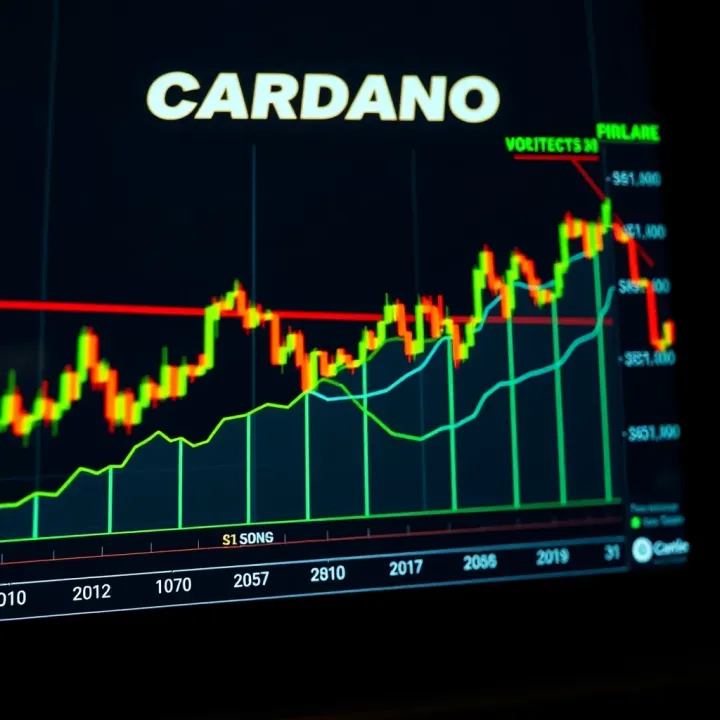
Cardano Price Prediction: What Investors Should Know
📈 Explore Cardano's price outlook with expert insights, market trends, and risk factors to help Kenyan investors make informed decisions in crypto trading.
Edited By
Grace Morgan
Gold, traded as XAUUSD in the foreign exchange market, represents the price of one troy ounce of gold expressed in US dollars. It has long been considered a safe haven asset during times of economic uncertainty, inflation, or currency instability. For traders, investors, and financial analysts in Kenya and beyond, understanding how gold prices move against the US dollar is essential for making informed decisions.
The price of gold in USD does not just depend on simple supply and demand; it is influenced by many interrelated factors. These include the strength of the US dollar itself, global geopolitical tensions, US interest rates, inflation data, and overall market risk sentiment. For example, when the US dollar weakens, gold prices often rise because it becomes cheaper for holders of other currencies, including the Kenyan shilling, to buy gold.

US Dollar Index (DXY): A stronger dollar means gold tends to drop as it becomes more expensive for international buyers. Conversely, a weaker dollar can boost gold demand.
Interest Rates: Higher US Federal Reserve rates increase the opportunity cost of holding gold, which pays no interest, typically pushing prices down.
Inflation Expectations: Rising inflation often leads investors to buy gold as a hedge, driving prices up.
Geopolitical Events: Conflicts, trade wars, or tensions trigger safe-haven buying, increasing gold prices.
Kenyan investors usually interact with gold markets through local exchanges or global platforms offering XAUUSD contracts or ETFs. Monitoring US economic reports like the Consumer Price Index (CPI) or Federal Reserve announcements is crucial since these affect gold prices globally. Similarly, fluctuations in the Kenyan shilling against the US dollar will impact the local cost or gains from gold investments.
Understanding the relationship between the US dollar and gold is not just academic; it directly affects your trading strategy and portfolio risk management.
To improve trading accuracy, combine fundamental analysis with technical tools such as moving averages, RSI (Relative Strength Index), and support/resistance levels on XAUUSD charts. This dual approach helps identify entry and exit points based on both economic conditions and price trends.
By following these practical insights, Kenyan traders and investors can better navigate the complexities of gold price movements against the US dollar, making smarter, more confident decisions in their trading activities.
Understanding the role of XAUUSD is vital for traders and investors who follow gold price movements against the US dollar. This pair specifically reflects how much one ounce of gold is worth in US dollars, making it a key indicator of gold’s value in global markets. Since gold is traded worldwide, its price in dollars affects investors and businesses across various sectors, including mining, jewellery, and manufacturing.
XAUUSD is a currency pair that measures gold priced in US dollars. Here, 'XAU' is the currency code for one troy ounce of gold, while 'USD' stands for the US dollar. This pair is unique because it represents a commodity priced like a currency rather than a financial instrument pairing two fiat currencies. For practical purposes, traders see XAUUSD as a way to track gold’s value and speculate on price changes using forex platforms.
Gold holds a special place in both commodity and forex markets. As a commodity, it is a physical asset whose price depends on supply and demand, mining output, and industrial use. In the forex scene, gold acts as an alternative asset or a ‘currency’ for hedging against inflation or economic instability. For example, during a period when the US dollar weakens, gold’s XAUUSD value usually rises, giving forex traders a hedge option.
Whenever the global economy faces uncertainty—be it geopolitical tensions, inflation spikes, or market crashes—gold demand tends to rise. Investors see it as a refuge because it does not lose intrinsic value when stocks or currencies fluctuate wildly. During the COVID-19 pandemic, for instance, gold prices climbed steadily as fear gripped financial markets worldwide.
Investors flock to gold in volatile times because it preserves wealth better than many other assets. Unlike paper money, gold cannot be printed, which protects its value against inflation. Plus, gold’s physical nature means it cannot be hacked or erased, unlike digital assets. In Kenya, some investors even buy physical gold as a store of value during periods when the shilling depreciates sharply against the dollar.
Gold's reputation as a reliable safe-haven means it often moves in the opposite direction to riskier assets, offering balance to diversified portfolios.
In summary, XAUUSD serves as a key benchmark for gold pricing, reflecting broader economic trends and investor sentiment. For anyone trading or investing in Kenyan shillings or internationally, following this pair offers insights into both the health of the US dollar and the global demand for gold.

Understanding the drivers behind XAUUSD price movements is vital for traders and investors. This knowledge helps in anticipating shifts in gold prices against the US dollar, allowing for smarter decisions. Key factors include the strength of the US dollar, global economic indicators like inflation and geopolitical events, and central bank activities.
Gold and the US dollar often move in opposite directions. When the US dollar strengthens, gold prices tend to fall, and when the dollar weakens, gold usually gains value. This inverse relationship occurs because gold is priced in dollars: a stronger dollar makes gold more expensive for holders of other currencies, reducing demand.
Consider a scenario where the US dollar index rises due to strong economic data; foreign investors might find gold pricier, so they pull back, causing gold prices to dip. This dynamic is especially relevant for Kenyan traders using KSh, as exchange rate swings between KSh and USD impact gold affordability.
US monetary policy also influences this relationship. When the Federal Reserve raises interest rates, the dollar often gains strength since higher rates attract foreign capital seeking better returns. Consequently, gold prices may slide because gold does not yield interest, making it less appealing compared to dollar assets. On the other hand, when the Fed eases policy or pauses rate hikes, the dollar may weaken, giving gold room to climb as investors seek safer stores of value.
Inflation plays a direct role in shaping gold prices. Rising inflation erodes the purchasing power of cash, so investors turn to gold to preserve wealth. For example, if inflation in major economies like the US surpasses expectations, gold prices often rise in response. For Kenyan investors, keeping an eye on US Consumer Price Index (CPI) releases can offer clues about upcoming gold price trends.
Geopolitical tensions also impact gold's supply-demand balance. Conflicts or political unrest can cause uncertainty, pushing investors toward gold as a safe haven. For instance, during heightened tensions in the Middle East or trade disputes, demand for gold surges, lifting prices. Conversely, periods of calm and strong global growth often reduce gold's appeal.
Central banks worldwide influence the gold market through their reserves and purchase policies. When central banks, including Kenya’s Central Bank or larger ones like China’s or Russia’s, increase gold reserves, it signals confidence in gold’s value, putting upward pressure on prices. For Kenyan traders, tracking reports on central bank activity provides a practical edge by anticipating changes in gold availability or demand.
Following and understanding these factors can improve timing and risk management for XAUUSD trading, especially in a market as dynamic as Kenya’s.
US dollar strength usually moves gold prices inversely
Federal Reserve interest rate changes directly affect both USD and gold
Inflation increases gold’s appeal as a store of value
Geopolitical instability boosts demand for gold
Central bank gold purchases can tighten supply and raise prices
By focusing on these elements, you can better interpret price movements in the XAUUSD market and refine your trading strategies accordingly.
Understanding fundamentals is key when trading the XAUUSD pair. Unlike technical analysis, which focuses on charts and patterns, fundamental analysis looks at economic events and policies that affect gold prices and the US dollar. This approach helps traders anticipate price moves based on real-world data rather than just past price action. For Kenyan traders, grasping these fundamentals means better timing and decisions, especially when major data releases and policy announcements impact the market.
Economic indicators like the Consumer Price Index (CPI), employment reports, and Gross Domestic Product (GDP) figures offer direct clues about the health of the US economy and influence gold prices. The CPI measures inflation, which tends to push gold prices up as investors seek protection against rising costs. Employment data, such as non-farm payrolls, reflect economic strength; strong jobs growth usually supports the US dollar and can weigh on gold since gold is priced in dollars.
GDP figures show the overall economic output, with higher growth often leading to stronger dollar demand and lower gold prices. Kenyan traders closely watching these indicators during scheduled releases, say from the Bureau of Labour Statistics or the US Commerce Department, can adjust their gold positions accordingly. For instance, if Kenya’s shilling weakens but US inflation data spikes, gold may rise despite local currency weakness.
Interpreting these data in relation to gold's trends requires context. Rising inflation beyond expectations typically pushes XAUUSD upward, but if accompanied by hawkish signals from the Federal Reserve (Fed) to hike interest rates, gold might struggle. Traders must balance inflation fears against real yields — if interest rates offer better returns, gold loses appeal.
Being alert to sudden shifts in CPI or employment numbers helps Kenyan investors avoid surprises. For example, in early 2023, stronger-than-expected US inflation data led to brief gold price spikes before the market digested future rate hike prospects, causing gold to pull back. This kind of nuanced reading improves trade timing.
The Federal Reserve’s decisions on interest rates and monetary policy strongly influence XAUUSD prices. When the Fed raises rates, the US dollar often strengthens, making gold more expensive in other currencies and reducing demand. Conversely, rate cuts or dovish signals can boost gold as lower yields diminish the opportunity cost of holding non-yielding assets like gold.
For Kenyan traders, staying updated on Federal Open Market Committee (FOMC) meetings and statements is crucial. These sessions not only set policy rates but also shape market expectations through forward guidance. Traders who anticipate Fed moves before official announcements can gain an edge.
Monetary policy changes also affect trader sentiment toward gold. If the Fed signals it will be patient on rate hikes due to weak economic data, gold often benefits as investors seek safety amid uncertainty. On the flip side, a hawkish Fed stance to tame inflation can depress gold prices despite inflation risks.
This dynamic means that even if inflation is rising, if the Fed commits to aggressive rate hikes, gold prices might drop. Kenyan investors should therefore watch both inflation statistics and Fed commentary closely to understand where sentiment is heading. For example, during a period when Fed chair comments hinted at slower rate increases, gold quickly rallied as traders adjusted expectations.
Fundamental analysis for XAUUSD is less about guessing gold’s exact price and more about understanding the economic backdrop influencing both currencies. Kenyan traders using this knowledge can improve their entry and exit points, manage risks better, and align trades with global economic rhythms.
Technical analysis lets traders study past price movements to guess where gold priced against the US dollar (XAUUSD) might head next. For traders and investors, especially those in Kenya entering volatile markets, this approach serves as a handy toolkit to navigate price swings without solely relying on economic news. By spotting repeating chart formations and key price points, you can make more informed entry and exit decisions on your trades.
Use of moving averages, RSI, and MACD
Moving averages smooth out price data over specific periods to highlight trend direction. For instance, a 50-day moving average crossing above a 200-day MA often signals a bullish trend in gold prices. The Relative Strength Index (RSI) measures overbought or oversold conditions, with values above 70 suggesting gold is overbought and might pull back, while values below 30 indicate oversold conditions possibly signalling a rebound. The MACD (Moving Average Convergence Divergence) shows momentum shifts — when the MACD line crosses above the signal line, it may imply rising gold prices.
Applying these indicators together helps confirm signals. For example, if RSI is below 30 (oversold) and MACD just crossed bullishly, it might be a good time to buy XAUUSD.
Identifying support and resistance levels
Support is the price level where gold tends to stop falling because buyers come in, while resistance is the opposite — a ceiling where sellers dominate. Spotting these levels lets you set practical targets and stop losses. Let's say gold prices bounce multiple times around KSh 190,000 per ounce; this forms a support zone. If price struggles around KSh 200,000, that might be resistance.
Traders watch for breaks above resistance or drops below support for potential trend shifts. For example, if gold breaks resistance decisively, buying opportunities often appear as momentum picks up.
Recognising bullish and bearish trends
Bullish trends imply rising gold prices against the dollar, marked by higher highs and higher lows on the chart. Bearish trends show the opposite — prices falling with lower highs and lower lows. Knowing the dominant trend helps avoid fighting the market; Kenyan traders often hold onto winning positions longer in bullish runs and stay cautious or sell during bearish stretches.
For example, during times of economic uncertainty, gold often enters a bullish trend as investors seek safety, which you can spot by steady upward movement supported by volume surges.
Applying candlestick patterns to forecast moves
Candlestick charts provide detailed info on price action within specific periods, revealing trader sentiment. Patterns like the hammer signal a price reversal upward after a downtrend, while a shooting star indicates potential reversal down after a rally. Recognising these helps traders anticipate turning points.
Take a hammer forming near a known support level; this suggests buyers defend that price and a price rise may follow. On the other hand, a bearish engulfing pattern at resistance might warn of a drop ahead. Such patterns, combined with other tools, enhance timing in the XAUUSD market.
Technical analysis isn’t foolproof but provides practical insights into gold price behaviour. Combined with sound risk management, it equips traders to handle XAUUSD market dynamics confidently.
Trading the XAUUSD pair in Kenya comes with unique opportunities and challenges. Local traders must adapt strategies that fit Kenya’s specific financial ecosystem, including popular payment methods, broker access, and market volatility influenced by both global and domestic factors. Practical strategies focus on leveraging available tools like M-Pesa, identifying reliable international brokers, and managing risks in a market prone to sudden price swings—especially around major financial news.
Using M-Pesa and mobile trading apps makes gold trading accessible to many Kenyans beyond traditional bank users. With M-Pesa’s widespread reach, traders can fund their accounts swiftly and securely without needing a bank transfer, which can be slow or costly. Mobile apps like Olymp Trade, ThinkMarkets Kenya, or MetaTrader 4 provide friendly interfaces and direct integration with M-Pesa, allowing instant deposits and withdrawals. For example, a trader in Nakuru can open an account and start trading gold right from their phone during a matatu ride.
Accessing international brokers in Kenya widens the choice of trading instruments and competitive spreads but requires cautious selection. Many reputable brokers accept Kenyan clients and support M-Pesa for payments, making it easier to bridge local financial habits with global markets. Traders should verify brokers’ licenses—preferably regulated by entities like the Financial Conduct Authority (FCA) or the Capital Markets Authority (CMA) in Kenya—to ensure security. For instance, FXPesa is a popular local broker offering access to XAUUSD with local deposit options. Using such brokers helps Kenyan traders access liquidity and tools otherwise unavailable locally.
Managing volatility especially during major news is critical when trading gold, as XAUUSD prices can swing wildly on US Federal Reserve announcements or inflation reports. Kenyan traders should keep a close eye on financial calendars and avoid holding large positions around these events. Using smaller trade sizes during volatile periods helps preserve capital and reduces exposure to rapid, unpredictable price changes.
Effective risk management isn’t just about avoiding losses; it’s about making losses manageable so you can stay in the game longer.
Setting stop-loss and take-profit levels safeguards investments and locks in gains. A stop-loss automatically closes a position when the price moves against the trader beyond a certain point, preventing large losses. Meanwhile, take-profit levels secure profits once the price hits a target. For example, if a trader buys gold at KSh 200,000 per ounce, a stop-loss might be set at KSh 195,000 to limit losses, while a take-profit could be KSh 210,000 to realise gains. Well-planned use of these tools helps traders handle the XAUUSD swings sensibly and avoid emotional decision-making.
Adapting these practical strategies with local platforms, strong risk controls, and careful broker selection helps Kenyan traders navigate gold trading with confidence and resilience.
📈 Explore Cardano's price outlook with expert insights, market trends, and risk factors to help Kenyan investors make informed decisions in crypto trading.
📈 Explore Bitcoin price trends, expert views, risks & market factors shaping Kenya's crypto scene. Stay informed on what's next for BTC value!
📈 Explore factors shaping Binance Coin's (BNB) price, market trends, technical insights, and risks to inform your crypto investing decisions in Kenya.

📈 Explore Bitcoin price in USD: key factors, expert views, pitfalls in predictions, and smart tips for forecasting its future value in Kenya's market.
Based on 10 reviews