

Using TradingView with Deriv for Smarter Trading
📈 Learn how to use TradingView with Deriv to analyze charts, monitor signals, and boost your trading decisions effectively in Kenya's market.
Edited By
Ethan Walker
TradingView and Deriv are powerful platforms that Kenyan traders can use together to make smarter investment choices. TradingView is famous for its detailed charts and technical indicators, while Deriv offers a reliable trading platform with various options like CFDs and binaries. Combining the strengths of both tools helps in analysing market trends more accurately before placing trades.
To get started, you first create accounts on both platforms. TradingView has a free plan with lots of charting tools, but you may want to upgrade if you need advanced features. Deriv requires registration and KYC verification to comply with regulations. Once set up, you can view real-time TradingView charts side by side with Deriv’s interface or use TradingView to inform your entry and exit points on Deriv.
Using TradingView’s customisable indicators alongside Deriv’s flexible trading options reduces guesswork and helps you respond quickly to market changes.
Here are some ways to benefit from the integration:
Use TradingView’s diverse indicators (like RSI, MACD, Fibonacci retracements) to identify trends and reversals.
Monitor multiple currency pairs or stocks on TradingView while trading on Deriv.
Set alerts on TradingView to notify you of price movements matching your strategy.
Practice on Deriv’s demo account while sharpening your chart analysis skills on TradingView.
For example, if TradingView shows a strong support level at a certain price, you can plan to open a call option on Deriv close to that point. Likewise, spotting bearish signals early helps you avoid losses.
It’s worth noting that connectivity and latency might affect real-time syncing between the platforms, so ensure your internet connection is stable. Also, protect your accounts with strong passwords and enable two-factor authentication.
Combining these platforms creates a solid foundation for market analysis and efficient order execution. Kenyan traders who leverage TradingView with Deriv often find their decision-making clearer and trading outcomes better aligned with market realities.
Understanding the fundamentals of TradingView and Deriv is key to making better trading decisions. Both platforms offer unique strengths that complement each other—TradingView provides powerful charting tools and market insights, while Deriv serves as a reliable execution ground where trades can be placed efficiently. For Kenyan traders looking to sharpen their skills, a clear grasp of each platform's offerings will help make informed choices backed by solid data.
TradingView stands out with its interactive charts that update in real-time. Traders can zoom in on price movements for detailed analysis or view broader trends using multiple timeframes. The charts support various types like candlestick, line, and bar charts, giving users the ability to spot entry and exit points clearly. For example, a trader monitoring NSE 20 index futures can easily switch between 5-minute and daily charts to judge short-term volatility versus long-term trends.
A major advantage TradingView offers is its vibrant community. Traders worldwide share ideas, strategies, and live market calls, creating a rich environment for learning and inspiration. Kenyan traders can benefit by following local or regional experts who understand EAC market dynamics and commodities like tea or coffee futures. Access to shared ideas helps avoid trading in isolation and often leads to discovering new approaches or catching signals that might have gone unnoticed.
TradingView allows users to build or apply custom indicators tailored to specific trading styles. For example, a trader using the Relative Strength Index (RSI) together with Moving Average Convergence Divergence (MACD) can create a personalized tool that issues alerts when both indicators show particular conditions, enhancing decision accuracy. This customisation stands out because traders aren’t limited to default settings and can experiment with parameters fitting their strategies.
Deriv offers a variety of trading options including Forex, commodities, synthetic indices, and options trading. Synthetic indices are particularly valuable for Kenyan traders as they run 24/7 and are designed to mimic real market volatility, allowing trading beyond traditional hours. This range means traders can diversify and select instruments that match their risk tolerance and market interests.
Deriv’s user interface is designed for both beginners and advanced traders, with a clean dashboard that presents account information, active trades, and charts clearly. Its mobile version works well in areas with unstable internet, common in parts of Kenya, enabling trades on the go without sacrificing speed or function. This accessibility ensures that even traders in rural towns can stay connected and responsive to market changes.
Opening a Deriv account involves a straightforward registration process that requires submitting identification and proof of address. Verification typically clears within a few days, allowing Kenyan users to start trading confidently, knowing their funds and data are secure. This process aligns with industry standards and Kenyan regulations, ensuring compliance and trust in the platform.
Combining TradingView's rich analytical tools with Deriv’s practical trading environment equips Kenyan traders to make smarter, more timely decisions, improving chances of consistent profitability.
This overview sets the foundation to explore deeper integrations and how to maximise the strengths of both platforms in upcoming sections.
Connecting your TradingView account with Deriv streamlines your trading workflow, making it easier to switch between analysing charts and placing trades. This link bridges the gap between detailed market insights on TradingView and the execution power of Deriv’s platform, a combination especially useful for informed trading in Kenya’s vibrant market.
For traders looking to automate order execution or enhance real-time data flow, setting up API access is a key first step. Deriv offers API connections that allow advanced traders to send trading commands directly from TradingView scripts or external bots. While this requires some technical know-how and creating API keys within your Deriv account, it cuts down on manual switching. For instance, a forex trader monitoring USD/KES charts can program buy or sell signals that trigger automatically when predefined patterns appear.
However, not all traders need this setup. API access is more relevant for those comfortable with coding or using third-party apps. If you are new to this, it’s best to start with manual integration options before moving to APIs.
Deriv and TradingView both work well on modern browsers and mobile devices, making link-up convenient. You can open TradingView charts side by side with Deriv’s trading interface on your PC browser or even split your phone screen if you trade on mobile. Some savvy traders pin TradingView tabs or use browser extensions to quickly shuttle data between the two platforms.
On mobile, apps like Deriv offer smooth trade execution while you keep TradingView charts open in a separate tab or app window. This setup helps Kenyans who rely on mobile data and prefer trading on the go—say, during a matatu commute or from a local café.
Keeping data synced is critical to ensure your chart analysis matches what’s happening on Deriv in the market. This involves setting your TradingView charts to refresh automatically and monitoring Deriv’s market updates for delays.

Practical steps include adjusting your chart time frames to match Deriv’s tick data and using alerts on TradingView that notify you instantly via app or email. For example, you could set an alert when the EUR/USD pair breaks a certain resistance level to prompt a quick trade entry on Deriv.
Real-time data synchronisation reduces lag between your analysis and action, helping you avoid missed opportunities or surprises in volatile markets.
Combining TradingView’s rich charting tools with Deriv’s trading service gives Kenyan traders a clearer picture of price movements and trends. TradingView offers advanced indicators and user-generated ideas that you won’t find directly on Deriv’s platform.
This means you can spot emerging patterns like head and shoulders or Fibonacci retracements early before taking a position on Deriv. Precise chart drawing and customised indicators help traders make more accurate entries and exits.
Once your analysis is ready on TradingView, you can switch immediately to Deriv for placing trades without losing momentum. This direct execution cuts down on the risk of market changes during delays.
For example, a trader watching a sudden breakout on the Nairobi Securities Exchange (NSE) index chart can place a derivative trade on Deriv’s OTC market instantly. The faster you act, the better your chance of harnessing price moves.
Linking these platforms lets you track open trades on Deriv while constantly refreshing TradingView charts. This enhanced oversight reduces the chances of holding onto losing positions too long.
You can also set alerts on TradingView to monitor price movements relative to your Deriv trades, helping you adjust stop losses or take profits promptly. For Kenyan traders juggling multiple income streams, this saves time and sharpens focus on key setups.
In a nutshell, integrating TradingView with Deriv blends smart analysis with efficient trading execution, perfectly suited to Kenya’s fast-moving financial scene.
Making informed trading decisions on Deriv requires a keen understanding of market movements. TradingView offers a suite of tools that give Kenyan traders an edge by providing detailed technical analysis capabilities. Using TradingView’s charting and analytical functions alongside Deriv enables better timing and precision, improving the likelihood of successful trades.
Traders in Kenya often rely on a few staple technical indicators to read market moods. The Relative Strength Index (RSI) is popular for spotting overbought or oversold conditions, which helps avoid jumping into trades at peak highs or lows. Moving Averages, particularly the 50-day and 200-day, assist in identifying the general trend direction, crucial for long-term positioning. Bollinger Bands signal market volatility and possible breakouts or pullbacks. These indicators are readily available on TradingView and can be tailored to suit different markets like forex, commodities, or indices present on Deriv.
Using just one indicator can give misleading signals, so combining two or more offers better clarity. For example, pairing RSI with Moving Average Convergence Divergence (MACD) helps confirm entry points: RSI alerts when the market is stretched, while MACD confirms momentum shifts. When both line up, traders have stronger reasons to take action. This approach also applies in Deriv trading, where executing trades backed by combined signals reduces emotional decisions and hasty moves. Kenyan traders benefit by minimising false alarms and focusing their capital on more reliable setups.
Trendlines are simple yet powerful tools to visualise market direction and momentum. Drawing an upward trendline helps spot steady rises, while a downward line identifies bearish phases. Support and resistance lines mark price levels where the market typically pauses or reverses. For instance, if coffee futures on Deriv repeatedly bounce off a KSh 500 level, that becomes a critical support. Traders using TradingView can draw and adjust these lines dynamically, making it easier to spot breakout opportunities or trend reversals before placing trades.
Graphically annotating charts with potential entry and exit points helps Kenyan traders plan trades with discipline. Drawing arrows or notes on TradingView to mark where a trade should start and the target profit or stop loss points creates a clear roadmap. For example, a trader watching EUR/USD charts may note an entry at a support touch with a stop loss just below, enhancing risk control. This visual skill not only aids decision-making but also prevents impulsive moves when trading on Deriv.
Using TradingView’s advanced charting and annotation tools makes the trading process more structured and less emotional, which is essential for long-term success.
Leveraging these TradingView tools with Deriv’s execution platform empowers Kenyan traders to act smartly, manage risks better, and seize opportunities with confidence.
Placing trades on Deriv using insights from TradingView charts allows Kenyan traders to act on well-analysed signals rather than guesswork. TradingView offers detailed chart patterns, trend indicators, and community-generated trade ideas, which when combined with Deriv’s flexible trading tools, help users make informed decisions. This approach reduces the chances of rash or emotional trades, making the process more strategic and disciplined.
When you spot a strong buying or selling signal on TradingView, you can manually enter the trade on Deriv’s platform. This means you interpret indicators like moving averages, RSI (Relative Strength Index), or candlestick patterns yourself, and then place the corresponding order. For instance, if TradingView’s charts show a breakout above resistance, you would manually open a buy position on Deriv. This method gives you full control over trade size, direction, and timing, which is crucial since automated linking is limited.
Using TradingView to identify key support and resistance levels helps in setting smart stop loss and take profit points on Deriv. For example, if an uptrend faces a strong resistance at a certain price, you might set your take profit just below that level to lock in gains. Similarly, placing a stop loss just below a recent support can protect capital by exiting losing trades early. These safeguards help Kenyan traders manage losses and secure profits, protecting their hard-earned KSh.
The signals from TradingView don’t just guide entry and exit points; they also inform risk management. You might decide not to risk more than 2% of your trading capital on a single trade, adjusting your stake accordingly. Combined with stop losses, this strategy keeps losses manageable and allows for steady growth. For Kenyan traders unfamiliar with risk controls, trading based solely on emotions or guesses often leads to heavy losses – using TradingView signals with sound risk management helps avoid this trap.
Deriv’s trade monitoring dashboards offer real-time updates on active positions, including current profit or loss, price movements, and trade duration. This feature enables traders to keep a close eye on how trades informed by TradingView signals evolve. For example, if a trade moves against you faster than expected, you can make timely decisions to adjust or close it. For Kenyan traders balancing trading with other commitments, dashboards provide a quick overview without needing constant manual checking.
After placing trades on Deriv, efficient trade management includes the ability to modify or close orders quickly. Deriv allows you to adjust stop loss and take profit levels as markets change, or to close trades early to protect profits or minimize losses. Suppose you notice a reversal forming on TradingView after opening a trade; you can modify your exit points or close the trade entirely to avoid damage. This flexibility builds confidence and control, important for traders dealing with Kenya’s sometimes volatile markets.
Using TradingView insights alongside Deriv’s trade execution and management tools can give Kenyan traders a clearer path to consistent profitability. It brings technical clarity and practical tools together for smarter, more disciplined trading.
When using TradingView with Deriv, Kenyan traders often face practical challenges that can affect performance and decision-making. Understanding these hurdles and how to tackle them helps maintain smooth trading and reduces costly mistakes. Addressing technology-related issues and psychological aspects of trading is key to consistent success.
Reliable internet is a must for using TradingView and Deriv platforms effectively. Kenyan internet can be patchy, especially outside urban centres, due to infrastructure gaps or overloaded networks during peak hours. Even a brief disconnection can delay trade execution or cause missed signals, affecting profits.
To prepare, many traders use both mobile data and home broadband, switching between them as needed. Safaricom and Airtel both offer reasonably fast networks in Nairobi and major towns. Having a backup power source like a power bank is handy, since frequent power outages can disrupt mobile internet as well.
Both TradingView and Deriv deploy regular updates to improve security and add features. However, scheduled maintenance or unexpected outages can limit access or functionality temporarily. This sometimes happens during crucial market hours, causing frustrations or missed chances.
Kenyan traders should keep an eye on official notifications from both platforms and plan trades around these windows. Using the Deriv app alongside the web platform offers some flexibility. It’s wise to avoid high-risk strategies during planned downtimes and to keep manual contacts ready in case of urgent support needs.
Trading with clear, achievable goals keeps emotions in check. Instead of chasing large returns daily, set modest profit targets suited to your capital and market conditions, such as aiming for 1–2% gains per day or week. This avoids rash bets driven by greed or frustration.
For example, a trader with KSh 50,000 may focus on trades worth KSh 5,000 with clear stop losses. Knowing when to walk away after meeting goals helps preserve capital for future opportunities.
Documenting trades regularly supports self-awareness and discipline. Details to record include entry and exit points, reasons for the trade, outcomes, and emotional state at the time. Reviewing this journal helps spot patterns like impulsive moves or overtrading during losses.
Several Kenyan traders have found simple Excel sheets or mobile apps useful for journalling. Over time, this creates a personal guide to improve strategies and build confidence in decision-making, resulting in steadier profits.
Managing technical challenges and emotional discipline together sets Kenyan traders on a stronger path to making better decisions using TradingView and Deriv.
When trading online using platforms like TradingView and Deriv, prioritising security and compliance is essential. Protecting your account and personal data prevents financial losses due to hacking or fraud. At the same time, understanding the regulatory framework ensures your activities are legally compliant, avoiding penalties or blocked transactions. For Kenyan traders, awareness of these aspects promotes confidence, especially when handling real money through these platforms.
Two-factor authentication (2FA) adds an extra layer of security beyond just a password. It requires you to provide a second verification, such as a code sent to your mobile device or an authentication app. This means that even if someone guesses or steals your password, they cannot access your account without the second factor.
On Deriv and TradingView, enabling 2FA significantly reduces the risk of unauthorised access. Many Kenyan users rely on Safaricom’s M-Pesa or their phone network to receive these codes, which is convenient and quick. Without 2FA, your account is vulnerable, especially in cases of poor password habits or phishing scams.
Creating strong, unique passwords for your TradingView and Deriv accounts is vital. Avoid common words, repeated numbers, or easy-to-guess sequences like "123456" or "password". Instead, use a mix of uppercase and lowercase letters, numbers, and symbols.
It's also smart to use different passwords for different platforms. For example, don’t use the same password for your M-Pesa and your trading accounts. Consider using a password manager to keep track of your various passwords securely. Changing passwords periodically and avoiding saving them on shared or public computers reduces the chance of your details leaking.
Deriv operates under several international licences, meaning it follows certain rules to protect traders. While it is not specifically licensed by the Central Bank of Kenya, it abides by strict regulations in other jurisdictions, offering a measure of trustworthiness.
Kenyan traders should understand that Deriv’s international licensing helps ensure funds segregation and fair trading practices. This reduces risks like fraud or unfair delays in withdrawals. However, users should remain cautious and only trade with amounts they can afford to lose.
Kenya’s Capital Markets Authority (CMA) regulates trading activities within the country, covering stocks, bonds, and authorised derivatives trading. While platforms like Deriv fall outside direct CMA regulation, Kenyan laws still require traders to pay taxes on earnings and avoid illegal trading schemes.
Being informed about the legal framework helps Kenyan users avoid running afoul of regulations, such as using unlicensed brokers or trading on scam sites. If unsure, consulting CMA resources or financial advisors in Kenya is advisable before committing large funds.
Taking security steps and understanding legal requirements is key for safe, confident trading on TradingView and Deriv. Protect your accounts, know the rules, and trade responsibly to get the most out of these powerful tools.
📈 Learn how to use TradingView with Deriv to analyze charts, monitor signals, and boost your trading decisions effectively in Kenya's market.

Explore the Deriv trading app's features in Kenya 🇰🇪, from account setup to trade types, risk tips, and local support for all traders 💼📈

Discover practical tips for using Deriv bots in Kenya 🇰🇪 to automate trades, manage risks, and boost your profits with smart strategies 📈🤖
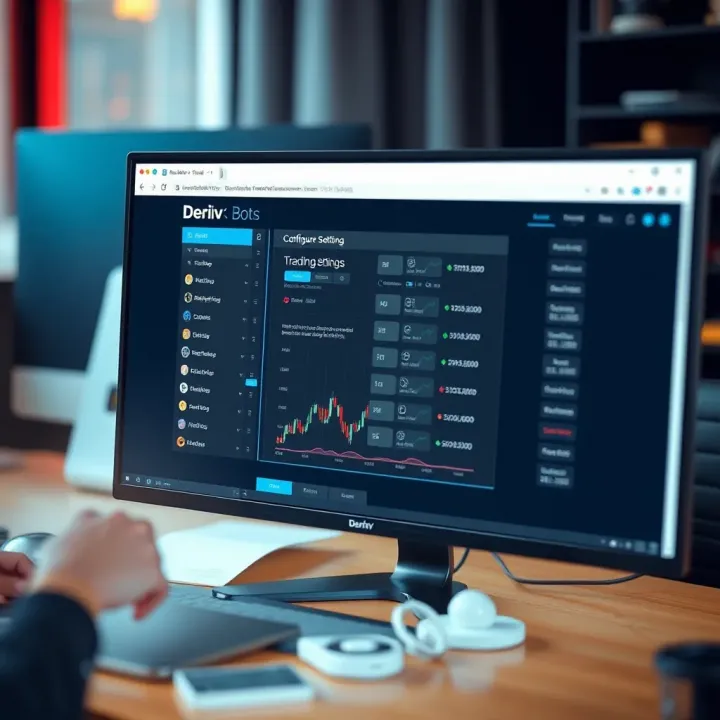
🤖 Discover smart strategies to use Deriv trading bots effectively in Kenya. Learn setup, risk tips, and how to boost profits while avoiding common pitfalls.
Based on 7 reviews