
Understanding Bot Trading in Forex
🤖 Explore how forex bot trading works in Kenya, its pros, risks, and tips on choosing and managing automated systems for smarter trading decisions.
Edited By
Elizabeth Norton
A forex trading account is your gateway to the world’s largest financial market, where currencies are bought and sold daily. For Kenyan traders, understanding this account type is key before you start trading foreign exchange (forex). It holds your funds, tracks your trades, and connects you to the global market.
Opening a forex account is different from a regular savings or investment account. It involves selecting a broker, providing identification, and funding the account—usually in Kenyan Shillings (KSh). The broker acts as an intermediary between you and the forex market.
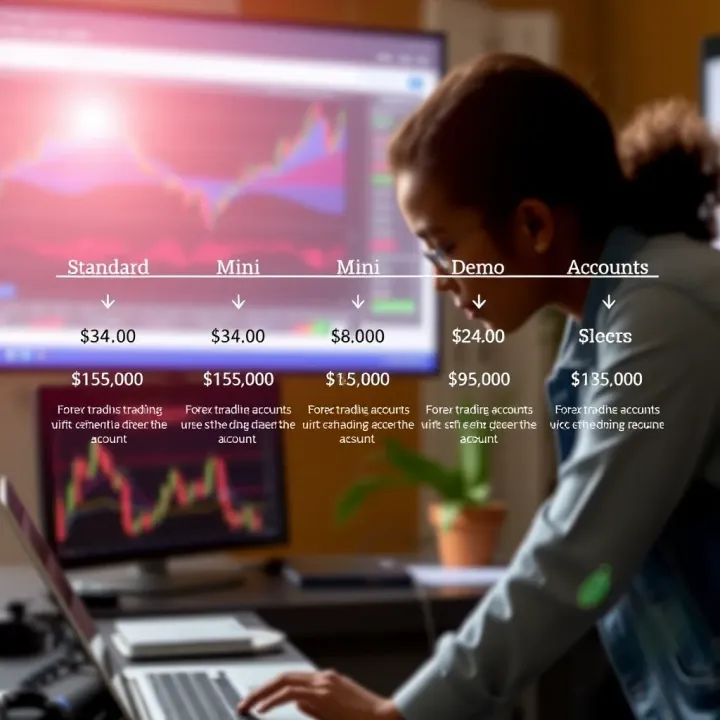
Forex accounts come in several types, each suited for different levels of experience and trading goals. Common varieties include:
Standard accounts: Require a higher minimum deposit, ideal for serious traders with more capital.
Mini and micro accounts: Allow trading smaller volumes, good for beginners wanting to test strategies with less risk.
Demo accounts: Offer virtual funds for practice without risking real money.
Trading in forex involves risk; managing your account size and leverage carefully protects your capital.
Leverage is another critical factor. Many brokers offer leverage ratios, sometimes up to 1:100 or more, meaning you can control larger positions with a smaller deposit. But leverage can magnify losses as well, so Kenyan traders should treat it cautiously.
When choosing a broker and account, look beyond marketing claims. Check for licensing—Kenya’s Capital Markets Authority (CMA) regulates many brokers, ensuring your money is safer. Also, consider the broker’s customer support, deposit and withdrawal options (like M-Pesa), and the trading platform’s usability.
Remember, a forex account is more than just a place to hold money. It’s your trading tool. Keep track of your trades, manage risks, and stay informed about currency movement influenced by global and Kenyan economic events, such as CBK’s interest rate announcements or shifts in the US dollar-KSh exchange.
Starting with clear knowledge on forex trading accounts helps you avoid common pitfalls and sets you up for more confident trading ahead.
A forex trading account is your gateway to the foreign exchange market, where currencies from around the world are bought and sold. For Kenyan traders, this account is essential because it holds your deposited funds that you will use to trade currencies like the US dollar, euro, or British pound against the Kenyan shilling or other pairs. Without such an account, it’s impossible to access the currency market.
Opening a forex trading account allows you to participate in global currency movements, potentially profit from exchange rate changes, and diversify your investment portfolio beyond traditional assets like stocks or real estate. It acts as the foundation for all your trading activities, providing the platform and resources needed to place trades, monitor markets, and manage risks.
A forex trading account holds your deposited money and connects you to the broker’s trading platform, enabling you to buy and sell currency pairs. It tracks your trades, calculates profits or losses, and allows you to manage your capital. For example, if you believe the US dollar will strengthen against the Kenyan shilling, you would enter a trade using this account.
The account acts as a secure wallet combined with a trading tool, giving you real-time access to market data and the ability to execute orders quickly. Kenyan traders often link these accounts with mobile money options like M-Pesa for easy funding and withdrawals.
Anyone interested in forex trading must have a trading account. This includes individual traders, investment groups, financial managers, and even entrepreneurs who want to hedge currency exposure. For a university graduate in Nairobi testing forex trading as a side hustle, having an account means direct access to currency pairs without needing a physical broker.
Professional traders and businesses dealing with import or export can also use these accounts to manage currency risks. Without such an account, you would lack a structured way to enter or exit trades, track performance, or manage capital effectively.
To open a forex trading account in Kenya, you generally need some form of government-issued ID such as your national ID or passport, proof of residence like a utility bill, and your Kenya Revenue Authority (KRA) Personal Identification Number (PIN). These documents help brokers verify identity and comply with local laws.
Additionally, you must have a minimum deposit amount, which varies depending on the broker and account type. Some brokers allow as low as KSh 1,000 to start, making forex accessible for many beginners. Lastly, a stable internet connection is essential to use the trading platform effectively.
Funding your forex trading account in Kenya is straightforward thanks to mobile money services like M-Pesa. Many brokers accept deposits via M-Pesa, bank transfers, or debit cards. After registering with a broker, you link your preferred payment method and load funds to the account.
Withdrawals work the same way, often processed within one or two business days. For instance, after closing profitable trades, you can request to cash out directly to your M-Pesa wallet. It’s important to check your broker’s withdrawal policies to avoid delays or unexpected fees.
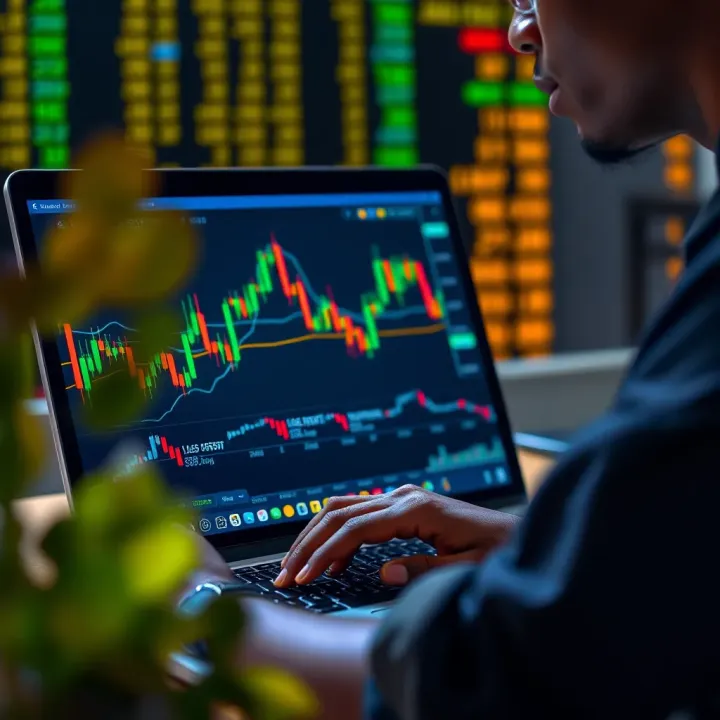
Your trading account grants you access to an online trading platform such as MetaTrader 4 (MT4) or proprietary software. These platforms display real-time price charts, allow order placement, and have tools for analysis. On your laptop or mobile device, you can monitor trends, set stop-loss orders, or take profit at preferred price levels.
The platform’s usability matters because speed and reliability affect your trading success. Brokers often provide demo accounts for you to practise trading without risking real money before going live.
Leverage in forex trading allows you to control a larger position than the amount you deposit. For example, with 1:100 leverage, KSh 10,000 in your account lets you trade KSh 1,000,000 worth of currency. This can amplify profits but also losses, making it a double-edged sword.
Margin is the deposit needed to open and maintain a leveraged position. Kenyan traders must understand their broker’s margin requirements and use leverage cautiously, especially if new to trading. Over-leveraging might wipe out your account quickly, so controlling risk is vital.
Remember: Always start with manageable amounts and practice risk controls like stop-loss orders to protect your capital.
This understanding of what a forex trading account is and how it works lays the foundation for Kenyan traders to navigate the forex market confidently and responsibly.
Choosing the right type of forex trading account is key for any trader, especially in Kenya where individual circumstances and financial goals vary widely. Different accounts offer various benefits and limitations, so knowing which one fits your style and budget helps prevent unnecessary risks. For instance, a trader in Nairobi who wants to start small without risking too much capital would likely prefer a micro account over a standard one.
Standard accounts usually require a minimum deposit ranging from KSh 50,000 to KSh 100,000, depending on the broker. These accounts give access to full-sized lots — typically 100,000 units of currency per trade — which means higher potential profits but also bigger risks. Standard accounts come with comprehensive features such as lower spreads and access to advanced trading tools.
This type suits traders who have a solid grasp of forex markets and can afford to commit larger sums. For example, an entrepreneur with experience in forex trading might use a standard account to maximise returns by trading full lots. However, jumping into a standard account without sufficient capital or knowledge can lead to significant losses.
Mini and micro accounts provide access to smaller trade sizes, often as low as 1,000 units or less. This means traders can engage in forex trading with much lower capital, sometimes starting with just KSh 5,000 or KSh 10,000. Because the monetary exposure per trade is smaller, the risk is reduced compared to standard accounts.
These accounts are ideal for beginners or those testing new strategies. For instance, a university student in Kenya interested in learning forex without risking hefty amounts could start with a micro account. This way, they get practical exposure while managing risk effectively.
Islamic forex accounts comply with Sharia law by eliminating interest payments, known as riba, on overnight trading positions. Traders who prefer this option avoid fees that contradict their religious beliefs. Instead, brokers may charge fixed commissions or no overnight fees at all.
These accounts differ primarily in terms of how swaps or rollover fees are handled. Unlike regular accounts where traders pay or receive interest, Islamic accounts make sure these charges are zero or replaced with alternative fees compliant with Islamic finance principles. For Muslim traders in Kenya, this ensures that their trading remains ethical according to their faith, without sacrificing access to the forex market.
Choosing the right account type is not just about size and cost; it’s about aligning trading with your financial situation, experience, and personal beliefs. Kenyan traders benefit from understanding these differences clearly before opening an account.
Opening a forex trading account in Kenya marks the first step towards engaging with the global currency market. This process demands careful attention to local requirements and broker choices to secure a smooth trading experience. Proper account setup is not just about ticking boxes but ensuring your funds and trading strategies are protected under reliable platforms.
Kenyan traders have access to both local and international brokers. Local brokers often understand the local financial landscape and may offer services like deposit and withdrawal through M-Pesa, making transactions straightforward. However, international brokers can provide a broader range of currency pairs and sometimes tighter spreads, but their payment methods might be limited and regulatory oversight varies.
When selecting a broker, regulation is key. Kenya’s Capital Markets Authority (CMA) regulates local brokers to protect traders. Kenyan traders should prefer brokers licensed by the CMA or at least well-regulated in respected jurisdictions like the UK or Australia. Fees also matter—look at spreads, commissions, and withdrawal charges, as these affect profitability. Lastly, reputation counts. Reading user reviews, checking for complaints, and reviewing how brokers handle disputes can save you from scams or bad experiences.
Traders must provide a Kenya Revenue Authority (KRA) PIN and valid proof of identity, such as a national ID card or passport. The KRA PIN confirms your tax compliance status, which brokers use to comply with local tax laws. Identity verification helps brokers prevent fraud and adhere to anti-money laundering rules, protecting both your account and the market.
Proof of address is often required too. Kenyan brokers typically accept utility bills, bank statements, or tenancy agreements dated within the last three months. This step confirms your residence and aligns with global financial standards on customer verification.
Funding your account is normally possible through several methods. M-Pesa stands out for Kenyan traders due to its convenience, speed, and wide acceptance. Other options might include bank transfers or card payments. Knowing your deposit options before opening an account avoids frustration when ready to trade.
Starting your forex journey begins with registration on the broker’s platform. This typically means filling out an online form, uploading the necessary documents, and setting your trading preferences. A straightforward registration process reflects a broker’s professionalism and helps you get started quickly.
Linking payment methods is next. For instance, connecting your M-Pesa or bank account usually requires confirming a small transaction. Ensuring these links are secure and functional allows smooth deposits and withdrawals, vital for active trading.
Before risking real money, test the broker’s demo account. Demo accounts simulate live markets without financial risk, helping you familiarise with the platform interface and trial your trading strategies. This step often saves new traders from costly mistakes once live trading starts.
Taking the time to carefully open and verify your forex trading account in Kenya pays off by making your trading experience safer, more efficient, and better aligned with local financial systems.
Managing your forex trading account well is vital to keep your investments safe and improve your chances of success. Proper management helps you control risks, monitor your progress, and stay disciplined. Kenyan traders often face challenges like market volatility and scams, so understanding how to manage your account can make a real difference.
Using stop-loss and take-profit orders is essential for protecting your capital. A stop-loss order automatically closes your trade at a certain loss level, ensuring you don’t lose money beyond what you can afford. For example, if you open a trade at KSh 100, a stop-loss could be set at KSh 95 to limit your loss to KSh 5. Meanwhile, a take-profit order locks in gains by closing a trade when it reaches a target profit. These tools take emotion out of the trading process and help you manage risks practically.
Importance of leverage control cannot be overstated in forex trading. Leverage lets you control a large position with a small amount of money, which sounds appealing but can be dangerous if unchecked. Using high leverage might amplify your profits, but it also increases potential losses. For instance, using 100:1 leverage means a 1% market move wipes out your entire trading capital if no stop-loss is applied. Keeping leverage low, especially when starting, safeguards your account from sudden swings, a common issue with unstable forex pairs.
Tracking profits and losses helps you understand your trading performance over time. By carefully recording every trade’s outcome, you can see which strategies work and which don’t. Kenyan traders should use platforms that provide clear trade histories, so you avoid surprises when reviewing your financial status.
Regular account audits involve reviewing all transactions and trade activity periodically to spot errors, unexpected fees, or suspicious trades. An audit can uncover bank charges or broker fees that slowly eat into your balance. It also helps verify that trades reflect your instructions, preventing losses from technical mistakes or fraud.
Using trading journals gives traders an edge by maintaining detailed records of trade decisions, feelings, and results. Writing down why you entered or exited a trade, plus your thoughts during the trade, reveals patterns that might not be obvious otherwise. For example, a trader might notice a tendency to enter trades impulsively after a loss and use that insight to improve discipline.
Overtrading risks arise when traders open too many positions or trade with excessive frequency. Overtrading often leads to bigger losses and higher fees. Kenyan traders should set clear daily or weekly trade limits. It’s better to be patient, waiting for well-researched setups, instead of chasing every market wiggle.
Dealing with emotional bias is tricky because emotions like fear and greed tend to cloud judgement. They can cause premature exits or holding losing trades too long. Building a routine that includes strict trading rules, like preset stop-loss levels, helps reduce emotion-driven mistakes. It’s also helpful to take regular breaks and avoid trading when stressed.
Avoiding scams and fraud is a real concern for many Kenyan traders. There are unscrupulous brokers and schemes promising unrealistic returns. Always check if a broker is licensed by the Capital Markets Authority (CMA) and has a solid reputation. Be sceptical of offers that sound too good to be true. Use well-known payment methods like M-Pesa and verify any unusual account activity immediately.
Managing your forex trading account with discipline and smart checks helps you protect your capital and build steady trading habits essential for long-term success.
By understanding these practical steps, Kenyan traders can better navigate the forex market and guard against common pitfalls.
Understanding the legal and regulatory framework for forex trading is vital to protect your investments and operate within the law. Kenyan traders need to be aware of the rules set by financial authorities to avoid scams, penalties, or account freezes. Legal oversight also promotes fair trading conditions and ensures brokers act responsibly.
The Capital Markets Authority (CMA) regulates brokerage firms, including those offering forex trading services in Kenya. It sets licensing criteria, supervises market practices, and enforces compliance standards. For instance, CMA requires brokers to maintain adequate capital and transparently handle client funds. This regulation helps reduce the risk of fraud and protects traders from unreliable operators.
To confirm a broker’s legitimacy, you can check the CMA’s official register. This list shows all licensed brokers authorised to operate in Kenya. Using only CMA-approved brokers ensures your funds are safer and that dispute resolution mechanisms exist if problems arise. Keep in mind, some brokers operate internationally and may be licensed abroad but lack CMA approval; such brokers are riskier since local legal recourse is limited.
Forex trading profits are taxable income under Kenyan law. The Kenya Revenue Authority (KRA) requires traders to declare earnings from forex trading on their annual tax returns. Whether you trade as an individual or a business, it is important to keep proper records of all transactions, deposits, withdrawals, and net profits to support your declared income.
Typically, forex gains are treated like other sources of income and taxed at the prevailing personal or corporate income tax rates. For most individuals, this means up to 30% tax depending on total taxable income. Traders should register for a KRA Personal Identification Number (PIN) if they don’t have one and consider consulting tax professionals on how to legally optimise tax obligations and remain compliant.
Staying on top of legal and tax requirements not only avoids penalties but also strengthens your trading credibility. Follow CMA regulations and KRA guidelines to trade confidently within Kenya’s system.
🤖 Explore how forex bot trading works in Kenya, its pros, risks, and tips on choosing and managing automated systems for smarter trading decisions.
Explore Deriv trading in Kenya 📈 - learn how to trade forex, commodities & indices safely, master strategies, manage risks, and make smart investment choices.
Learn how Kenyan traders can use Deriv for forex trading 📈. Get tips on starting, managing risks, and understanding local regulations to trade smartly.
Explore binary trading in Kenya 🇰🇪 with insights on basics, legal rules, top platforms, risks, and smart strategies to trade wisely and avoid mistakes.
Based on 8 reviews