
Using TradingView for Binary Options in Kenya
📈 Discover how Kenyan traders can boost binary options trading using TradingView's smart charts, broker links, and solid risk management tactics!
Edited By
Grace Bennett
Binary options trading offers a straightforward, all-or-nothing approach to financial markets. Traders bet on whether the price of an asset will rise or fall within a specific time frame. The appeal in Kenya and beyond is clear: simplicity, quick decisions, and potential fast returns. However, this market demands sharp tools and strategies to succeed, which is where TradingView steps in.
TradingView is widely known for its comprehensive charting features and real-time market data. These tools can be invaluable for those dealing with binary options, allowing traders to analyse price movements, identify patterns, and time their trades better. For instance, a Kenyan trader looking at currency pairs like USD/KES can use TradingView’s layered charts to spot short-term trends before placing a binary option bet.
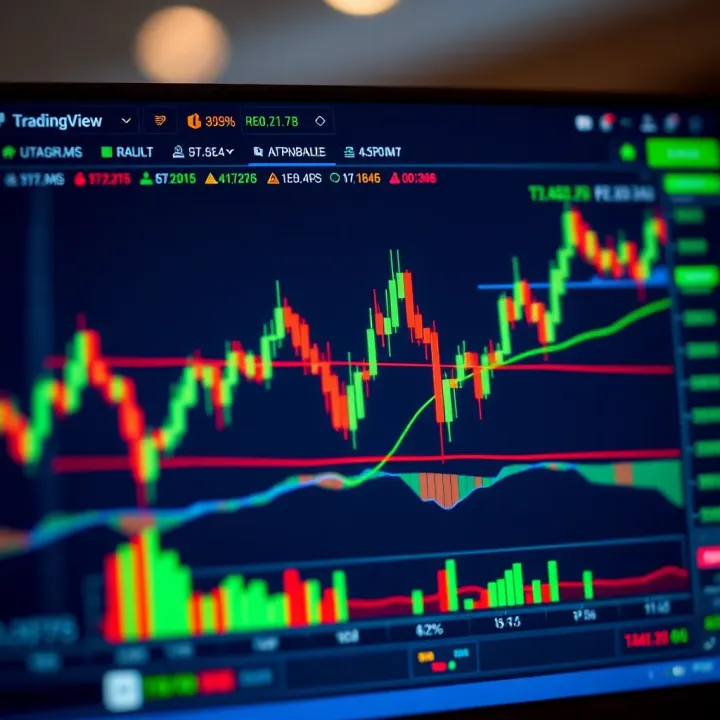
That said, TradingView is not a magic bullet. Its charts and indicators require interpretation, and the fast-paced nature of binary options means traders must be decisive and informed. Common tools on TradingView include candlestick charts, moving averages, and oscillators like RSI (Relative Strength Index) that help assess market momentum. By combining these tools, traders develop outlooks that improve chances of success.
Kenyan traders benefit especially from TradingView’s accessibility on mobile and desktop, making it easier to monitor markets amid everyday hustle. Plus, since Kenyan traders often work with brokers that might offer shorter expiry times, the ability to quickly assess charts is a significant advantage.
Using TradingView’s analytical tools helps cut through guesswork in binary options but requires discipline to manage risks effectively.
In practice, traders often test strategies such as spotting support and resistance levels or using simple moving average crossovers to decide entry points. They then place binary options contracts accordingly, aiming for profit before expiry. However, it’s vital to remember risks: the all-or-nothing payout means a wrong call wipes out capital fast, so good preparation and strict money management are key.
In the following sections, we will dig into specific strategies used on TradingView for binary options, highlight common pitfalls, and share tips tailored for the Kenyan market that boost your trading confidence and competence.
Understanding the basics of binary options and the role of TradingView sets the foundation for smarter trading decisions. This introduction is crucial because it highlights how these tools come together to make trading more accessible and informed. In Kenya, where many traders look for reliable resources to navigate volatile markets, knowing how binary options work alongside TradingView's features can save time and improve results.
Definition and basic mechanics: Binary options are a type of financial contract where you predict whether an asset’s price will go up or down within a fixed time. The term 'binary' means there are only two outcomes — either you get a fixed payout if your prediction is correct or lose your investment if it's wrong. Imagine betting on whether the Nairobi Securities Exchange (NSE) index will close higher or lower after 30 minutes; that’s essentially how binary options work.
Types of binary options: There are several types to consider, with the most common being the "high/low" option, where you predict if the price will be above or below a certain level at expiry. Others include "one-touch," where the price must touch a target before expiry, and "range" options, predicting the price stays within a band. Each type offers different risk and reward profiles, allowing traders to choose based on their preferences and market understanding.
Common markets for trading binary options: Binary options cover various markets including forex pairs like USD/KES, commodities such as coffee or gold, stocks listed on NSE or US exchanges, and indices like the NSE 20. This diversity means traders can find opportunities related to sectors they understand well or those affected by local and global events. For example, during election seasons, some traders watch political news closely when trading currency pairs or indices.
Key features of TradingView: TradingView is a widely used charting platform offering real-time data and interactive charts. It’s popular because it combines easy-to-use tools with powerful analysis features, accessible via desktop or mobile. Kenyan traders can use it without worrying about heavy software installations, and can save their setups for quick access.
Charting and technical analysis tools: TradingView provides a broad range of technical indicators like moving averages, RSI, Bollinger Bands, and volume analysis. These tools help traders identify trends, momentum, and possible reversal points, all vital for timing entries and exits in binary options trades. For example, spotting when the RSI dips below 30 might signal an oversold asset ready to bounce, a useful cue before placing a binary options call.
Community and script sharing: One standout feature is TradingView's community where traders share ideas and custom scripts. Users in Kenya can tap into global and local insights, giving them a broader perspective on market movements without going it alone. Scripts created by other traders can automate parts of the analysis, helping to spot trading signals faster and more efficiently.
With this clear understanding of what binary options are, coupled with the powerful tools on TradingView, Kenyan traders can make more informed decisions, manage risks better, and adapt strategies to local market conditions.
TradingView offers valuable tools that binary options traders can use to make informed decisions. Its charting capabilities, combined with technical indicators and community-driven scripts, allow traders to analyse market movements precisely. This is especially useful in binary options, where expiry timing and price direction determine profit or loss.
The platform's visual interface helps traders spot price trends and patterns quickly. Because binary options often require short-term trades, having up-to-date charts and clear analysis tools improves chances of placing winning bets. For example, a trader focusing on forex pairs can monitor minute-by-minute price actions on TradingView and set alerts for key breakout levels.
Analysing price patterns and trends is fundamental in binary options trading. Traders typically look for signals like breakouts, pullbacks, or clear trend directions before deciding whether the price will rise or fall within a set expiry period. For instance, seeing a strong upward trend on a 5-minute chart may encourage a "Call" option for a short expiry window. Spotting candlestick formations like dojis or engulfing candles can also suggest reversals or continuation, guiding trade entries.
Setting up alerts and indicators relevant to binary options helps traders react promptly in volatile markets. Alerts on price levels, moving average crosses, or RSI thresholds notify traders without constant screen-watching. This is critical when trading short expiry options where seconds matter. For example, a trader might set an alert when the RSI drops below 30, signalling a potential oversold condition and a chance to open a "Call" option.
Timeframe selection for expiry decisions depends on the strategy and market conditions. TradingView allows switching between timeframes ranging from 1 minute to daily charts. Shorter timeframes like 1 or 5 minutes fit expiry times of 15 minutes or less common in binary options. Meanwhile, longer timeframes help spot bigger trends for expiry windows of 1 hour or more. Choosing the right timeframe ensures traders align their expiry with price action visibility.
Moving averages and RSI (Relative Strength Index) are widely used on TradingView by binary options traders. Moving averages smooth out price data, revealing the underlying direction, while RSI measures momentum and helps identify overbought or oversold conditions. For instance, a trader might pick a 14-period RSI and a 20-period moving average to confirm entry points. When RSI dips below 30 and price stays above the moving average, it could hint at a bullish move suitable for a "Call" option.

Bollinger Bands and Stochastic Oscillator provide insights into volatility and potential reversals. Bollinger Bands contract and expand based on price volatility, signalling possible breakout or reversal points. The Stochastic Oscillator compares closing prices to a range over time to indicate momentum changes. A binary options trader might look for price bouncing off lower Bollinger Band with Stochastic crossing upwards to signal a potential upside.
Volume and volatility indicators support decision-making by showing trading activity and risk levels. While volume is more relevant in stock or forex markets, sudden volume spikes can signal strong moves that impact binary options outcomes. Volatility indicators like ATR (Average True Range) indicate how much price moves fluctuate, helping traders avoid expiry times during low volatility where price may not move enough to profit. For example, high ATR values might encourage longer expiry to allow price trends to play out.
Careful use of TradingView’s robust tools significantly improves the timing and accuracy of binary options trades. It lets Kenyan traders spot clear market signals without guesswork and avoid rash decisions based on emotions.
This hands-on approach helps you manage risks better while putting you on the path for consistent trading results.
When trading binary options, having practical strategies is key to making informed decisions and managing risk effectively. TradingView offers powerful tools to spot market moves and plan trades, but knowing how to use these tools within clear strategies helps traders improve their chances. This section covers three core strategy types you can apply using TradingView: trend following, range trading and reversals, plus effective risk management.
A common way to spot a trend is by using moving averages. On TradingView, traders plot simple moving averages (SMA) or exponential moving averages (EMA) to smooth out price data and easily see the direction over time. For example, if the 50-period SMA crosses above the 200-period SMA, this may signal an upward trend. This clue helps binary options traders decide whether to buy a "call" option expecting prices to rise.
Using moving averages lets you avoid jumping into trades against the overall market flow. In volatile Kenyan markets, recognising a clear trend can save you from betting on false price moves.
Simply identifying a trend is not enough: good timing matters. Traders often combine moving averages with indicators like the Relative Strength Index (RSI) or MACD (Moving Average Convergence Divergence) on TradingView. For example, if an upward trend is shown, but RSI is overbought (above 70), it might be wise to hold back.
This confirmation reduces the chance of entering a trade right before a reversal or pullback. Kenyan traders dealing with short binary expiry times find this especially useful to pick moments where price momentum supports their trade direction.
Markets don’t always trend; sometimes prices bounce between levels. Identifying support (where price stops falling) and resistance (where prices struggle to rise) zones on TradingView charts can help you trade within these ranges. For instance, if price approaches a strong resistance from below, placing a "put" option (predicting a fall) might be smart.
These horizontal price levels often appear repeatedly, offering clues on where to enter or exit trades. Recognising them on TradingView helps binary traders avoid trading blindly.
Oscillators like the Stochastic or RSI shine in range-bound markets by indicating when price is overbought or oversold. When the RSI dips below 30 at a support zone, that’s a potential sign of an upward reversal.
Kenyan traders who combine these signals with visual support/resistance lines can better time entries on short-term binary trades, increasing the odds of capturing profitable reversals.
No matter the strategy, managing how much you stake per trade keeps losses manageable. Experts often recommend risking only 1-2% of your trading capital on each binary option. On platforms popular in Kenya, like those accepting M-Pesa payments, such discipline ensures you don’t wipe out your account after a few bad trades.
Binary options come with expiry times (e.g., 1 minute, 5 minutes, 1 hour). Matching this to your market analysis on TradingView is crucial. Fast expiry might mean relying heavily on momentum indicators, while longer expiry allows time for trends to develop.
Picking expiry time without strategy is like gambling. Kenyan traders should consider local market volatility—peak business hours may show sharp price moves affecting optimal expiry.
Successful traders accept losses as part of the game. Setting strict rules like "stop-loss" limits or profit targets helps avoid emotional trading. For example, you could decide to stop trading for the day after losing KSh 500 or take profits after winning KSh 1,000.
TradingView’s alerts feature can help you stick to these rules by notifying when your target price or loss limit is near. This discipline keeps your binary options trading methodical and sustainable over time.
Smart strategies combined with clear risk management turn TradingView's rich tools from mere charts into powerful trading allies. Kenyan traders using these practical approaches find they trade with more confidence and control.
Understanding the risks and limitations linked to TradingView usage in binary options trading is crucial. While TradingView offers powerful charting and analysis tools, traders should not overlook the inherent challenges in binary options trading itself, as well as what this platform cannot provide. Awareness can help manage expectations and sharpen decision-making.
High risk and potential for total loss: Binary options trading is inherently risky because every trade results in a win or a total loss; there’s no middle ground. For example, if you predict a price increase within five minutes and it doesn’t happen, you lose the entire stake. This all-or-nothing outcome demands discipline and careful risk management to avoid wiping out a trading account rapidly.
Short timeframes and market volatility: Binary options often involve expiry times as short as 60 seconds or five minutes. Such brief durations expose traders to high market volatility—a sudden matatu strike news or unexpected economic announcement can cause rapid price swings that invalidate carefully studied analysis. Short timeframes leave minimal room for error, making it harder to rely on TradingView’s usual signals.
Broker reliability concerns: Many binary options brokers claim to offer lucrative returns but lack proper regulation, leading to mistrust among traders. For Kenyan traders, choosing a broker registered with the Capital Markets Authority (CMA) or reputable international regulators can protect against issues like delayed withdrawals, price manipulation, or poor customer service. TradingView doesn’t verify broker integrity, so traders should do their own due diligence.
Lack of direct trading integration with binary option brokers: Unlike platforms for forex or stocks, TradingView does not connect directly with binary options brokers to place trades. This means traders analyse charts on TradingView but must switch to another platform for execution. This back-and-forth can cause delays, especially in fast-moving markets where seconds count.
Charting delays or discrepancies: TradingView sources data from multiple exchanges which may not perfectly align with broker feeds, especially for less common assets or CFDs. Kenyan traders might notice slight differences in price action between TradingView charts and what their broker shows. Such discrepancies can lead to confusion or mistimed trades.
Over-reliance on technical indicators: While TradingView offers a wide range of technical tools, depending solely on indicators without considering broader market context may mislead traders. For instance, an RSI showing oversold conditions might not anticipate abrupt economic news hitting the Kenyan shilling or a political event affecting regional markets. Combining technical analysis with fundamental awareness is safer.
TradingView is a powerful charting companion but not a standalone solution. Knowing its limits and the risks of binary options ensures smarter, more realistic trading choices.
By recognising these risks and platform restrictions, both new and experienced traders can approach binary options with better preparation and reduced surprises. Always combine TradingView insights with careful risk control and a solid knowledge of your chosen broker's reputation.
Starting out with TradingView and binary options trading in Kenya calls for a clear understanding of both platforms and the local trading landscape. Traders benefit from knowing practical steps such as setting up efficient accounts, choosing brokers that comply with Kenyan or international regulations, and adopting sensible trading habits. These elements not only improve the chances of success but also help avoid common pitfalls unique to this dynamic market.
Choosing the right plan for binary options trading
TradingView offers several subscription plans from free to premium tiers. For binary options traders, the choice depends on how many indicators or charts you want to use simultaneously. For example, the free plan might limit you to only one chart and fewer alerts, which can be restrictive when monitoring quick-expiry trades common in binary options. Upgrading to a Pro or Pro+ plan allows you multiple charts and custom alerts, which can make spotting entry points easier and save time during fast market moves.
Navigating the interface and saving setups
Once your account is ready, familiarising yourself with TradingView’s layout is key. Saving chart setups with preferred indicators – say moving averages combined with RSI – means you don’t waste time applying them every trade day. For Kenyan traders who might rely mainly on mobile or spotty internet, being able to quickly load preferred templates reduces delays, ensuring quicker reaction to market signals.
Regulation and licensing in Kenya and internationally
Working with a regulated broker ensures some level of protection for your funds. In Kenya, the Capital Markets Authority (CMA) supervises licensed firms, though binary options brokers are rarely locally licensed. Therefore, traders often rely on brokers regulated in respected international jurisdictions like Cyprus or the UK. Doing due diligence on the broker’s licence status prevents risking funds with untrustworthy outfits, which have occasionally caused Kenyan traders to lose money without recourse.
Common payment methods including M-Pesa
A practical broker choice must support payment methods familiar to Kenyan traders. M-Pesa remains the most popular and accessible mobile money service for deposits or withdrawals. Some brokers directly integrate M-Pesa, while others require bank transfers or card payments. Choosing a broker that supports M-Pesa avoids frustrating delays and high fees, especially for small-volume traders starting with modest capital.
Customer support and platform usability
Good customer service can make or break your trading experience. Brokers that offer 24/7 support through WhatsApp or phone help solve issues faster, especially during active trading hours in Kenya’s timezone (EAT). Similarly, easy-to-navigate platforms reduce chances of errors during quick trades. Always test the broker’s demo or live platform responsiveness before committing funds.
Practising with demo accounts
It’s wiser to start by practising on demo accounts that simulate real market conditions without risking shillings. This helps you test strategies on TradingView charts alongside the broker’s interface. Using demo mode you can learn how expiry times and price movements interact, which reduces costly mistakes once you begin live trading.
Starting with small investments
Despite the temptation to chase big wins, beginning with small amounts helps protect your capital. Binary options can be volatile, and losses can add up fast. In Kenya, some traders start with KS00 to KS,000 per trade, managing risk carefully as they build confidence and insights.
Keeping up with local market conditions and news
Though binary options often focus on international markets like forex or indices, local economic news, political developments, or Central Bank of Kenya decisions affect market sentiment. Staying updated through Kenyan news outlets and financial updates helps you understand when to be cautious or aggressive in your trades.
A good start balances technological setup with understanding your market, funding options, and practical experience. Taking time here saves headaches later on.
By following these steps, Kenyan traders can set a solid foundation for approaching binary options through TradingView with greater confidence and control.
📈 Discover how Kenyan traders can boost binary options trading using TradingView's smart charts, broker links, and solid risk management tactics!
📈 Master binary options trading with TradingView charts! Learn to analyze trends, use key indicators, and manage risks for smarter trades in Kenya 🇰🇪.
Explore trusted binary options brokers in Kenya 🇰🇪. Learn how to pick safe platforms, spot scams, and trade smarter with reliable tips and regulations ⚖️📈.
Explore binary options trading in Kenya 🇰🇪. Learn how they work, legal tips, risks, and practical steps to trade smart and avoid common mistakes.
Based on 12 reviews