

Guide to Using Binary.com App for Trading in Kenya
Explore the Binary.com app with our detailed guide 📱. Learn to set up your account, navigate trading options, stay secure 🔒, and fix common issues in Kenya 🇰🇪.
Edited By
Matthew Hughes
Trading on Binary.com using TradingView offers Kenyan traders a solid path to make better-informed decisions. Combining TradingView’s powerful charting with Binary.com’s flexible platform allows users to analyse market movements clearly before placing trades.
TradingView provides detailed charts with varied technical indicators such as moving averages, RSI (Relative Strength Index), and Bollinger Bands. These tools help traders spot trends, momentum, and potential reversal points — information crucial when dealing with binary options where timing is everything.

Binary.com, on the other hand, specialises in binary options trading, where outcomes depend on price predictions within set times. It’s popular in Kenya partly because of its easy-to-use interface and acceptance of local payment methods like M-Pesa, making trade deposits and withdrawals straightforward for the average trader.
For Kenyan traders, combining these platforms bridges the gap between raw market data and actionable trades, improving the chances of success in a fast-moving market.
To start, open accounts on both platforms. TradingView allows free access to charts with real-time data, while Binary.com asks for KYC (Know Your Customer) details due to regulatory needs. For deposits, Kenyans can easily use M-Pesa or bank transfers which Binary.com supports.
Next, link TradingView analysis with your Binary.com trades. Keep TradingView open on your computer or mobile device to watch real-time chart updates. Use chart signals to decide entry points, then execute trades on Binary.com accordingly.
Start small: Binary options can be risky; begin with minimal stakes to get a feel for how trades react to market changes.
Use stop-loss strategies: Even though binary options have fixed losses, plan your budgets carefully to avoid quick depletion.
Follow market news: Local economic updates, like CBK interest rate changes or global commodity prices, impact asset prices you trade.
Learn technical analysis basics: Focus on a few indicators first before adding complexity; mastering these gives better clarity.
This approach helps Kenyan traders tailor their strategies around market realities while using tools familiar and accessible. Properly applying TradingView insights in Binary.com trades fosters smarter trading habits suited for our local context.
Getting to know both TradingView and Binary.com is essential if you want to improve your trading outcomes, especially in the Kenyan market where access and tools vary. TradingView offers some of the best charting tools available, giving traders an edge in technical analysis while Binary.com provides a platform optimised for binary options trading. Many Kenyan traders find combining these two platforms helpful because TradingView’s detailed charts can inform decisions made on Binary.com, where execution speed and accuracy matter.
TradingView is well known for its easy-to-use, visually clear, and highly customisable charting. You can switch between various chart types like candlesticks, bars, and lines, useful for spotting trends and price action. The platform provides real-time data across many markets including forex, indices, and commodities, all relevant to Kenyan traders looking to diversify. One standout feature is the vast library of technical indicators such as moving averages, Bollinger Bands, and the Relative Strength Index (RSI). You can also create your own indicators or scripts, tailoring the charts to suit your individual trading style or the specifics of binary options.
Binary.com focuses exclusively on binary options, offering a straightforward interface that suits both beginners and experienced traders. What sets it apart is the ability to place trades with short expiry times, from as little as 30 seconds to several hours, making it practical for quick decisions based on TradingView analysis. The platform also supports different asset classes, such as forex pairs and commodities, allowing flexibility in trading choices. Kenyan traders appreciate the variety of funding options and the convenience of managing trades through a mobile-friendly setup. Plus, the platform’s emphasis on transparency and real-time results helps build confidence in trade execution.
Using TradingView alongside Binary.com is a practical way to leverage the strengths of both platforms. While Binary.com handles the actual trade placement, TradingView supports deeper market analysis with its superior charting tools. This combination reduces guesswork since you can observe price patterns, confirm signals, and monitor trends before executing trades. For instance, you could spot a bullish reversal pattern on TradingView and immediately place a call option on Binary.com. This approach is particularly helpful for Kenyan traders aiming to trade short-term expiry options, where timing and precision are key. Also, combining these platforms can help develop disciplined trading routines, increasing the chance of consistent performance and managing risk better.
Leveraging TradingView’s advanced analysis alongside Binary.com’s flexible trading environment makes a real difference for Kenyan traders targeting efficient, informed binary options trades.
Before jumping into trading on Binary.com using TradingView, setting up your accounts and tools correctly is vital. This step ensures smooth execution of trades and reliable access to analysis resources. Kenyan traders often face challenges like payment hurdles or platform nuances, so getting this part right saves time and avoids frustrations.
Opening an account on Binary.com is straightforward but requires attention to detail for verification. Kenyan traders must provide personal identification documents, such as a national ID or passport, for KYC (Know Your Customer) compliance. This process can take a few hours to a couple of days. Verifying your account early on helps avoid withdrawal delays later.
Binary.com offers demo accounts, allowing you to practise without risking real money. I recommend starting here to familiarize yourself with the interface and trading options before committing funds. For funding your live account, ensure you have Kenyan payment methods handy, such as M-Pesa or bank transfers.
TradingView is available as a web platform and a mobile app, both suitable for Kenyan traders who might switch between devices. Upon signing up, customise the interface to suit your trading style. For example, you could arrange multiple chart layouts showing currency pairs relevant to the Kenyan shilling like USD/KES or EUR/KES.
You can add technical indicators, change chart types (candlestick, line, Heikin Ashi), and set alerts for price movements. Adjusting timeframes helps you focus on short-term or longer-term trades, depending on your strategy. Kenyan traders benefit from these customisations because they turn TradingView into a tailored tool rather than a one-size-fits-all platform.
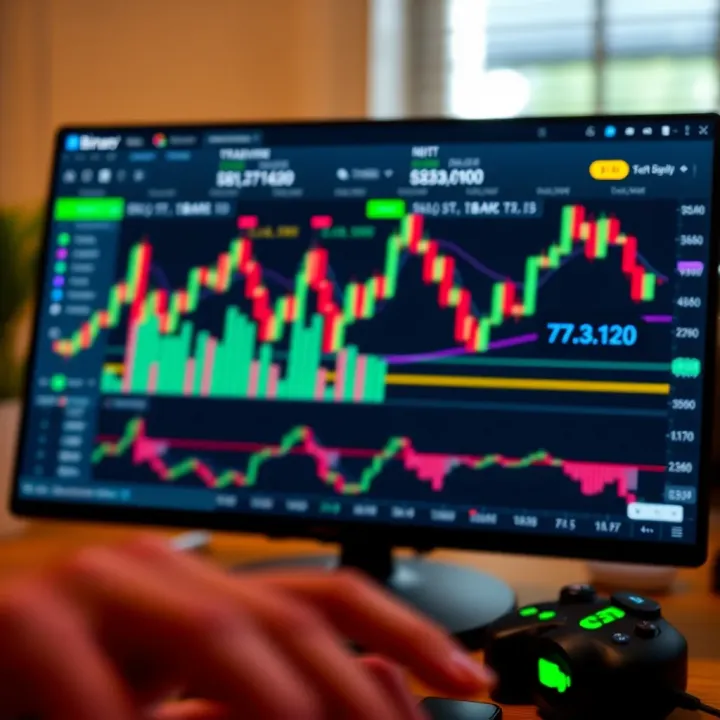
While Binary.com doesn't have direct integration with TradingView for trade execution, you can use TradingView charts as your analysis centre. Keep both platforms open side by side on your computer or mobile device. When TradingView signals a good opportunity — say, a bullish candlestick pattern confirmed by RSI — switch over to Binary.com to place the corresponding call or put option.
To make this efficient, consider using TradingView’s alert feature. Set alerts for price levels or indicator conditions, and receive notifications on your device. That way, you won't miss good trading opportunities when you’re away from your screens.
Practical setup is about consistency. Verified accounts on Binary.com, customised TradingView charts, and an alert system help Kenyan traders execute trades confidently and on time.
Getting these basics right puts you in a good position to leverage the tools effectively for profitable trading decisions.
In trading binary options on Binary.com, having a solid approach backed by reliable analysis tools makes a real difference. TradingView provides a comprehensive platform to develop, test, and apply trading strategies with real-time charts and technical indicators. For Kenyan traders, using TradingView alongside Binary.com can improve trade timing and increase the chances of success, given binary options depend heavily on precise entry and expiry points.
Moving averages (MAs) smooth out price data and help identify market trends over specific periods. Simple Moving Average (SMA) and Exponential Moving Average (EMA) are popular for spotting momentum shifts. For instance, a trader might use a 20-period EMA to observe short-term trends on a minute chart and enter expiry trades when price crosses this average. This approach helps to avoid trading against the prevailing momentum, which is critical in binary options where timing is tight.
Using two moving averages with different lengths, say a 9-period EMA and a 21-period EMA, can reveal crossovers that signal potential trade opportunities. When the shorter MA crosses above the longer one, it might indicate a buying chance, while a crossover downwards suggests selling or a 'put' option.
RSI measures the speed and change of price movements to highlight overbought or oversold conditions. It fluctuates between 0 and 100, with levels above 70 often taken as overbought and below 30 as oversold. For binary traders on short expiry options, spotting these extremes can inform quick decisions. For example, an RSI reading above 70 might hint that an asset, say EUR/USD, is overbought and likely to drop soon, presenting a timely 'put' option.
However, RSI should be combined with other signals because markets can stay overbought or oversold longer than expected. Kenyan traders must be cautious, especially during volatile sessions such as Kenyan market hours overlapping with London and New York markets.
Bollinger Bands consist of a moving average centreline with upper and lower bands calculated using standard deviations. These bands widen during high volatility and contract when the market calms. When price touches the upper band, it can indicate overextension and a possible reversal; similarly, touching the lower band might suggest the asset is oversold.
For example, if the price of Brent crude sharply rises and hits the upper Bollinger Band, it might soon pull back, creating an opportunity for a short binary trade. Kenyan traders using TradingView can customise band settings to suit expiry times, adapting them for 1-minute or 5-minute chart frames common in binary trading.
Candlestick patterns provide clear visual cues about market sentiment and potential reversals. Patterns like Dojis, Engulfing candles, and Hammer signals reflect traders’ indecision or shifts in momentum. For example, in the Kenyan market session, spotting a bearish engulfing candle after a steady uptrend can warn of a downward move. Combining these patterns with TradingView’s price action tools lets Kenyan traders anticipate short-term price moves suited for binary options.
Timing matters especially for short-term expiry options often lasting from 1 to 15 minutes. Analysing chart signals in real-time is crucial. Kenyan traders should watch how indicators like RSI and Bollinger Bands interact with candlestick patterns right before entering trades. For example, if a currency pair is at the upper Bollinger Band, and RSI shows overbought levels with a bearish reversal candle forming, this confluence strengthens the case for a ‘put’ binary trade.
In practice, syncing these signals with local exchange hours and typical volatility times, such as early morning when European markets open or late afternoon during Wall Street’s peak, can give Kenyan traders a better edge. Combining TradingView’s alert features to monitor indicator crossovers or price touching band edges can also prompt timely trades on Binary.com.
Using TradingView’s flexible tools can sharpen your binary options strategy by helping you see clearer entry and exit points. For Kenyan traders, blending this with market knowledge and local timings offers a practical way to improve trade accuracy and manage risks better.
Understanding risk management is essential when trading binary options on Binary.com, especially for Kenyan traders who often navigate a mix of local market challenges and limited regulatory frameworks. Managing your risk effectively helps protect your capital and ensures you can trade over the long term without burning out your account.
Choosing the right trade size based on your total capital is fundamental. Many new traders mistake the idea that ‘more is better’ and place large bets that can wipe their accounts quickly. For Kenyan traders, starting with small trade amounts—say 1% to 2% of your trading capital per trade—can slow down losses and provide a chance to learn the market movements without serious harm.
For example, if you have KSh 50,000 set aside for trading, placing trades of KSh 500 or KSh 1,000 allows room for trial and error. Binary.com’s flexibility in stakes makes it easy to adjust your trade size daily. Also, having daily or weekly loss limits can keep emotions in check. Once you hit your set limit, pause trading to review and avoid chasing losses.
Kenyan traders often fall into pitfalls like rushing trades without analysis or overtrading during volatile sessions. Using TradingView for technical analysis should help guide your decisions rather than guessing or following tips blindly.
Another common error is neglecting the platform’s expiry times. Binary options trades are highly sensitive to timing; picking the wrong expiry, like a 1-minute option during a news event, can end badly. Focus on understanding market conditions and combine TradingView signals with Binary.com’s expiry choices.
Also, avoid emotional trading. Don’t let a winning streak make you careless or lead to bigger risks. Keep records of your trades to monitor what works and what doesn’t.
Binary options don’t offer traditional stop loss orders like forex or stock trading, so Kenyan traders must rely on indirect risk controls. One way is to set personal stop loss limits in your trading plan—for instance, decide you won’t lose more than KSh 5,000 in a session.
Besides loss limits, consider diversifying your trades. Don’t put all funds on one asset; spread stakes across indices, forex pairs, or commodities offered by Binary.com. This approach reduces impact if one market moves unexpectedly.
Automated tools within TradingView, such as alerts for overbought or oversold conditions, can act as early warnings to exit or avoid trades. Use these alongside disciplined money management to stay ahead.
Good risk management is like the foundation of a house; without it, everything else can come crashing down quickly. Kenyan traders who focus on careful sizing, timing, and limits will find their Binary.com experience more sustainable and profitable.
Applying these practical tips helps Kenyan traders to handle the uncertainties of binary trading thoughtfully, balancing opportunity with caution in a fast-moving market.
Understanding local factors is vital for Kenyan traders using TradingView alongside Binary.com. These considerations affect how you fund your accounts, the legal protections available, and what community resources you can access. Paying attention to these details ensures your trading runs smoothly and avoids unexpected hurdles.
M-Pesa remains the most popular and convenient payment method in Kenya. Many Binary.com users find it easy to deposit and withdraw funds via M-Pesa because it is fast, secure, and widely accepted. Since M-Pesa links directly to your mobile phone, you can fund your trading account without needing a bank. For example, if you want to deposit KSh 5,000, you just follow a few steps on your Safaricom menu to transfer money directly to Binary.com’s payment number or through integrated payment providers.
The convenience of M-Pesa is unmatched, but fees can vary depending on the amount and agent used. You should confirm the charges before transferring to avoid surprises. Plus, Binary.com often updates which payment gateways are supported, so it's wise to check if M-Pesa deposits are fully enabled at your time.
Bank transfers offer a reliable and secure way to move larger sums from your Kenyan bank account to Binary.com. Most major banks, such as Equity Bank, KCB, Co-operative Bank, and NCBA, support online interbank transfers and SWIFT payments, which some traders prefer for greater security and record keeping.
However, bank transfers may take a few hours to several days to clear, depending on the bank and the intermediary financial institutions involved. For instance, transferring KSh 100,000 might reflect on Binary.com’s system within 24 to 48 hours. Always keep the transaction receipts and double-check account details to avoid delays or lost funds.
Using credit or debit cards is another popular option for Kenyan traders funding Binary.com. Cards issued by Visa, MasterCard, and sometimes American Express are accepted. Funding your account this way is quick, often instant, allowing you to jump into trading sooner.
Still, card payments can attract higher fees and currency conversion charges if your card is not denominated in US dollars or euros. For example, a KSh 10,000 deposit might have a 2-3% fee plus conversion costs. It's worth confirming with your bank and Binary.com’s deposit policies. Additionally, take care to use cards with strong security and two-factor authentication to protect against fraud.
Kenya’s financial services are regulated by the Capital Markets Authority (CMA), but binary options trading remains in a grey area. Unlike stocks or forex, there’s limited direct oversight specific to Binary.com or similar platforms. This means you have less formal protection if disputes arise.
That said, Kenyan traders are encouraged to use well-established, internationally compliant brokers to reduce risks. Always verify that Binary.com follows regulations relevant to their operating countries and provides transparent terms. Being aware of scams is crucial, as unregulated operators sometimes target Kenyan traders with false promises.
You should also keep abreast of local regulations as CMA and Central Bank of Kenya (CBK) update policies; this can affect how payment transfers, taxation, and trading are administered.
Connecting with other Kenyan traders offers practical insights that textbooks or official guides may miss. Online forums, WhatsApp groups, and Facebook communities focused on binary options and TradingView strategies can share tips, local challenges, and the latest updates on payment options or technical issues.
Plus, customer support from Binary.com is accessible worldwide, but Kenyan traders should also seek out local brokers or agents who can provide quicker and culturally relevant assistance. Some Kenyan fintech hubs or jua kali tech forums occasionally offer training on digital trading tools, which might boost your understanding.
In short, learning from fellow Kenyans can help you avoid common mistakes and stay updated on the nuances of trading from within the country. Look for verified communities and avoid unreliable message groups to keep your trading safe and efficient.
Explore the Binary.com app with our detailed guide 📱. Learn to set up your account, navigate trading options, stay secure 🔒, and fix common issues in Kenya 🇰🇪.

Explore how Binary.com bots work for trading in Kenya 🤖 Learn setup tips, bot types, risks & benefits to boost your automated trading journey effectively.

Boost your trading skills by linking Binary.com with TradingView 📊. Learn easy setup tips and use powerful charts to make wiser trade choices in Kenya!

Explore Binary.com's trading platform, services, and safety tips tailored for Kenyan users interested in binary options 📈💼. Learn how to trade wisely!
Based on 7 reviews